
Standing on the pedestal, you cannot see where the hook lands. So you hire a second man to wave you in. Or you climb down, walk around the job, and climb back up. Every single lift.
A truck mounted crane remote control ends that loop. Every boom function moves onto a transmitter you carry, and you work from two metres beside the load instead of two metres beside the hydraulics.
Techwell has built industrial radio remote control systems since 2005. Our units run loader cranes, knuckle booms, boom trucks and service bodies across 40+ countries — including cranes that left the factory long before wireless was ever an option.
Two parts. That is the whole system.
Techwell transmitter hangs off your belt or a shoulder strap. A receiver bolts to the crane and wires into the valve block. Push a button, the transmitter sends a coded radio packet, and the spool shifts. Let go, and the motion stops — right there, not three seconds later.
No umbilical. No fixed station to climb into. One person runs the whole lift, standing wherever the view happens to be best. That is really all a wireless remote control for crane work is doing: moving the controls to the operator, instead of moving the operator to the controls.
Either rows of push buttons or one to two joystick levers. Buttons suit single-speed work: stabilisers, winch up and down, engine stop, PTO engage. Joysticks suit boom work, where you want extension and slew moving at the same time, at a speed you choose. Most loader crane radio remote owners end up on a dual-axis unit.
A sealed box mounted in the crane body or on the pedestal column. It takes radio commands and turns them into relay closures or proportional analogue outputs that drive your solenoids. Pairing is by unique ID, so two cranes working ten metres apart will not respond to the same handset.
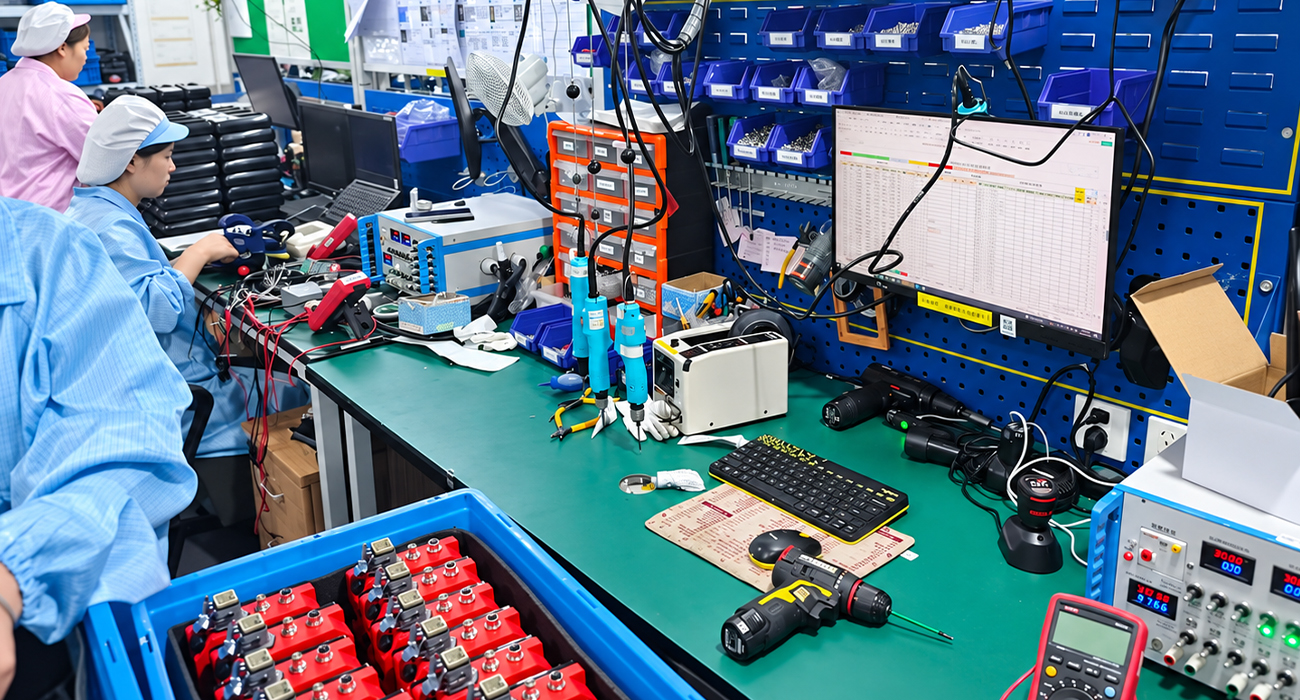
Most suppliers can sell you a box. Four things separate the ones worth calling:
Two shapes. Pick based on what your crane actually does
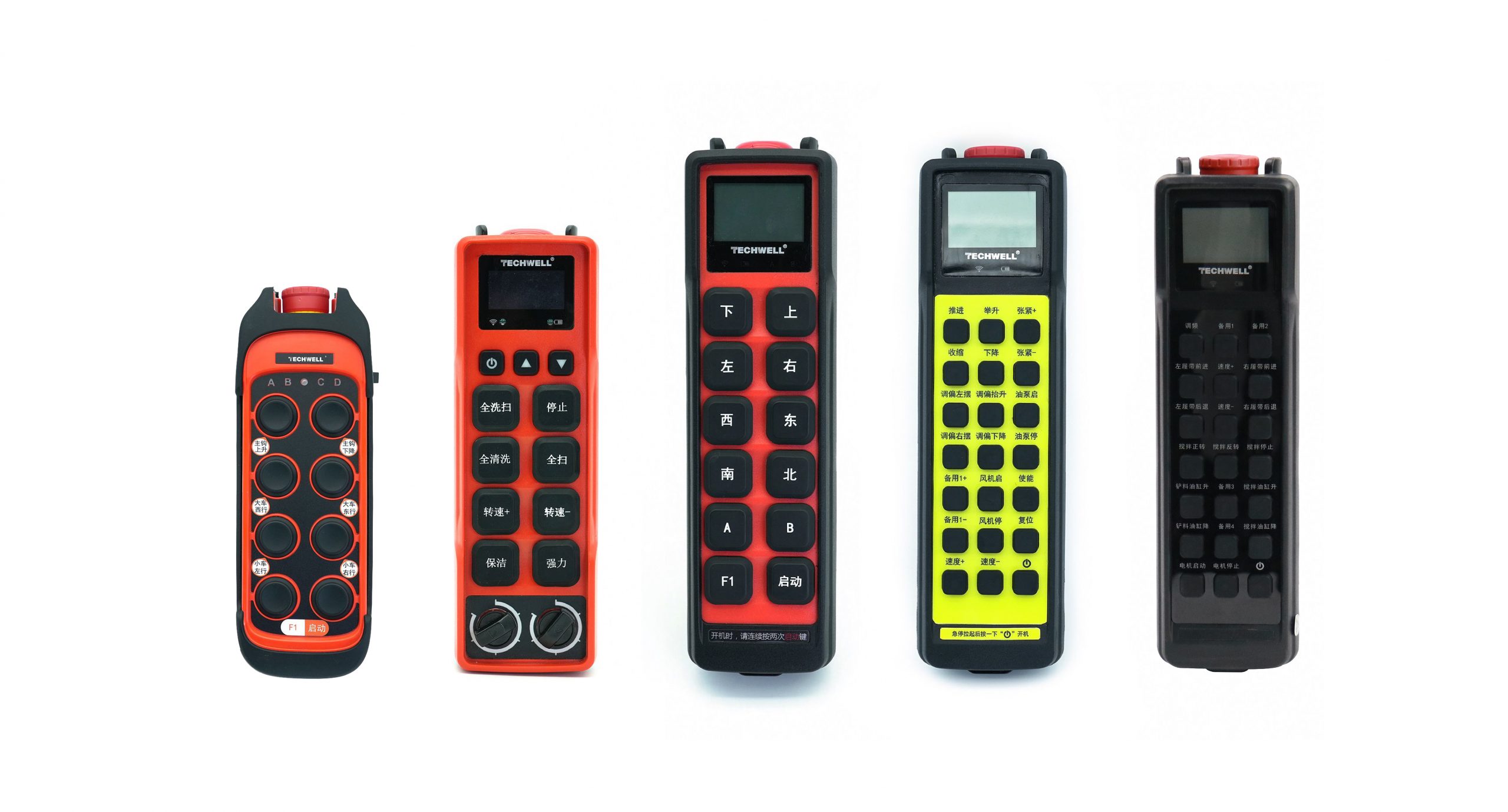
Eight or twelve keys you can find through gloves. Right for single-speed work: stabilisers, winch, engine stop, PTO. BES08 and SES08 are the standard eight-channel builds. STS12 steps up to twelve when the crane carries more functions than a typical six. Around 24hours on a charge, and they keep running while you swap the pack.
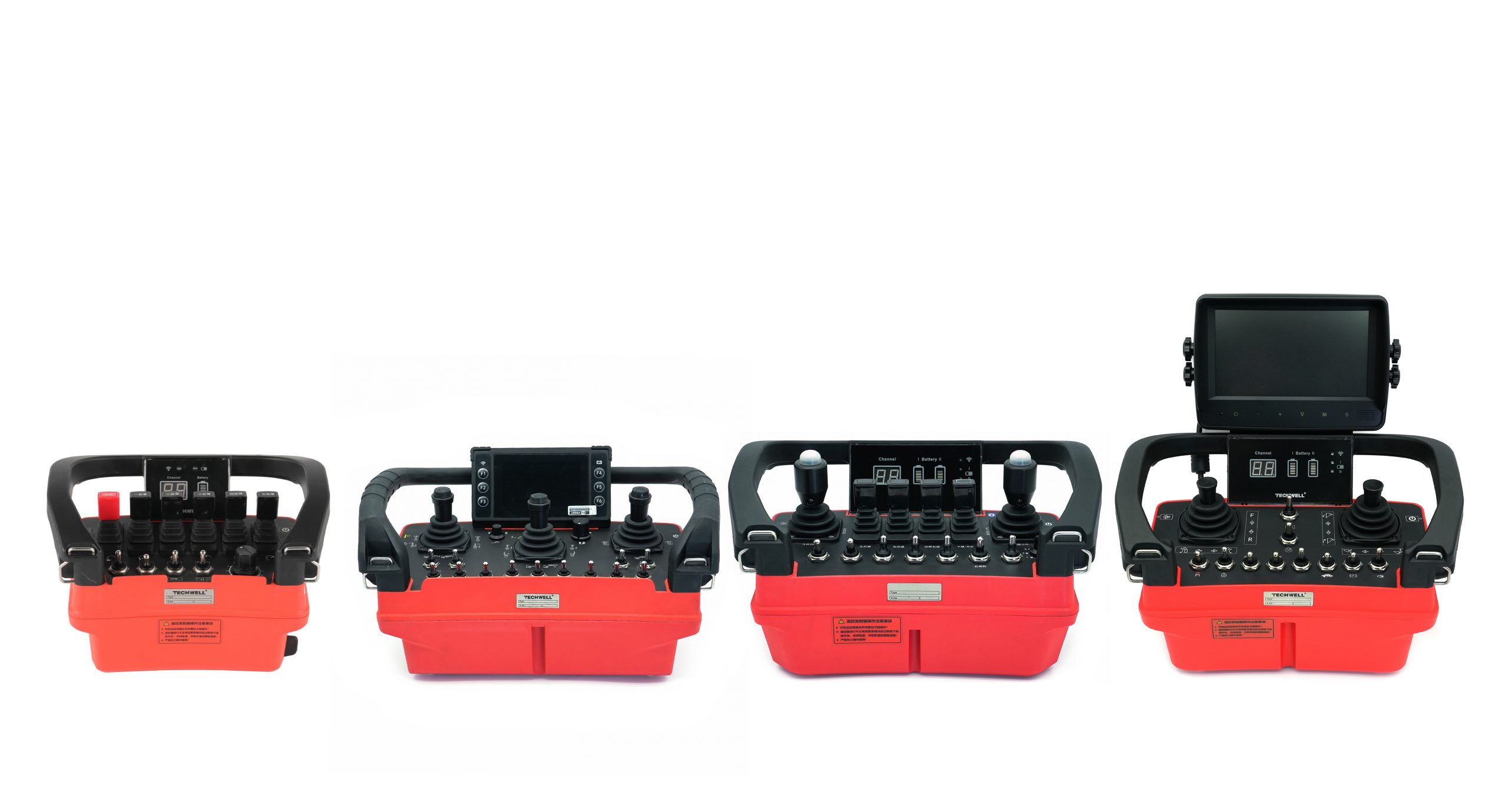
When the crane needs proportional control, a lever beats a button every time. BMJ20 is the mid-size dual-axis unit most loader crane owners land on — one lever for extension and slew, the other for boom and winch. BLJ20 gives longer throw and more auxiliary switches for multi-function machines. Ask us about display variants if you want load feedback or fault codes on the handset.
People call this machine five different names depending on where they learned the trade. All of them work with our systems. If your crane has hydraulic functions, we can map them.
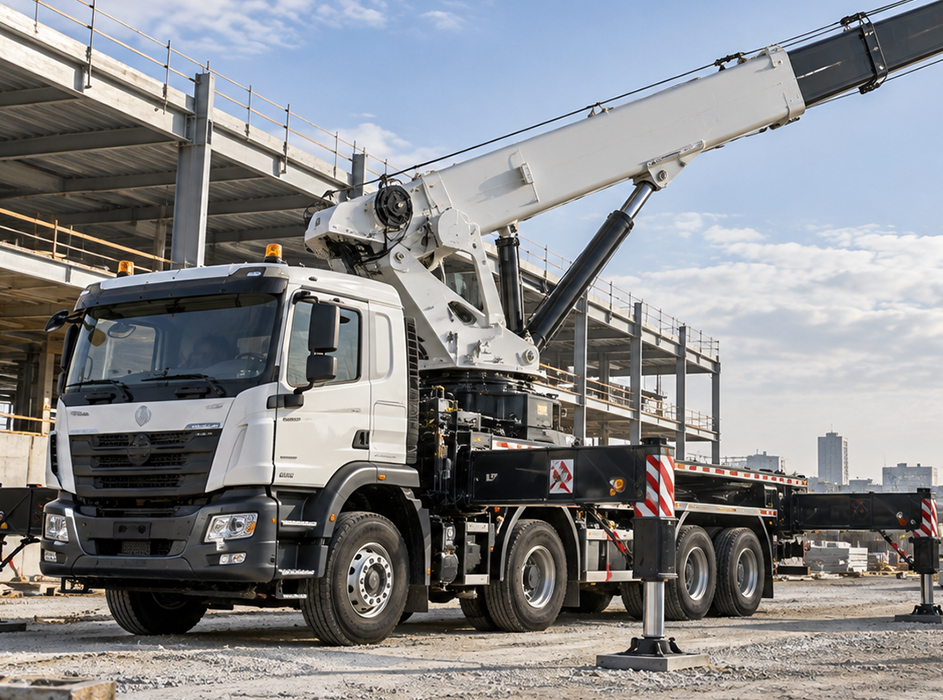
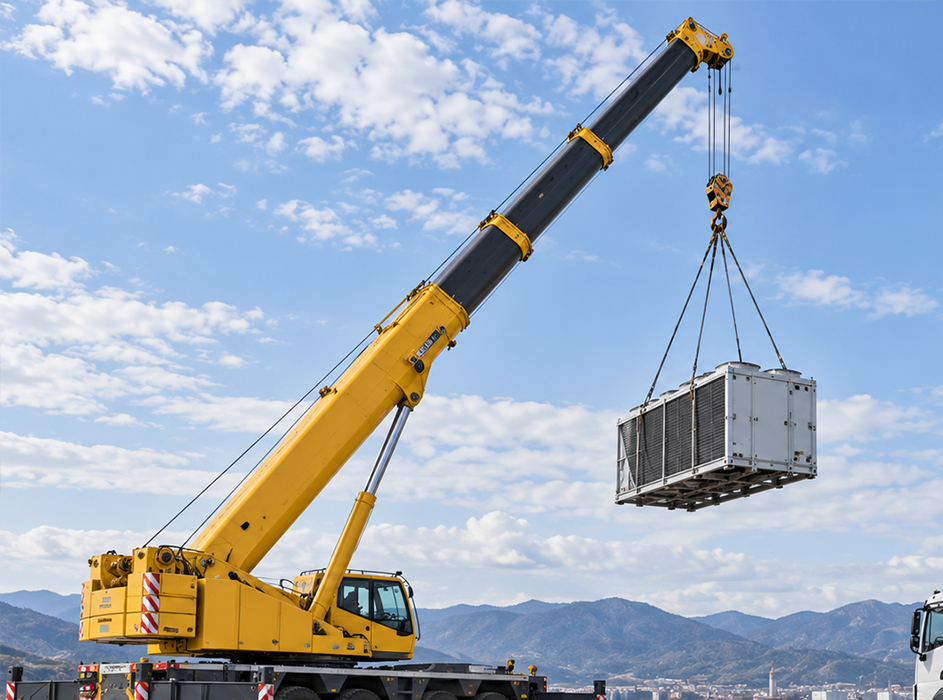
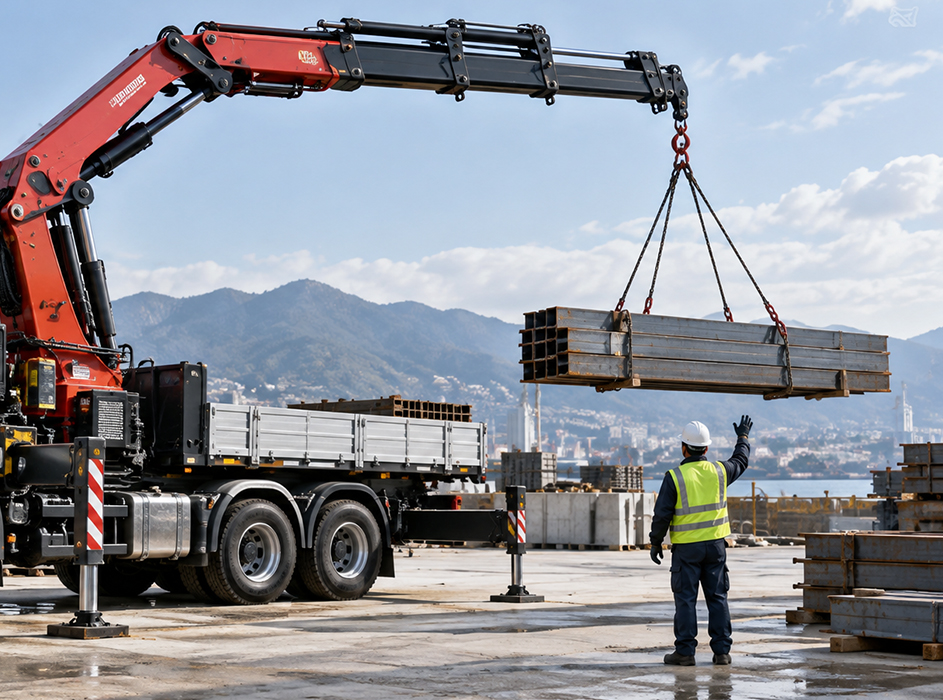
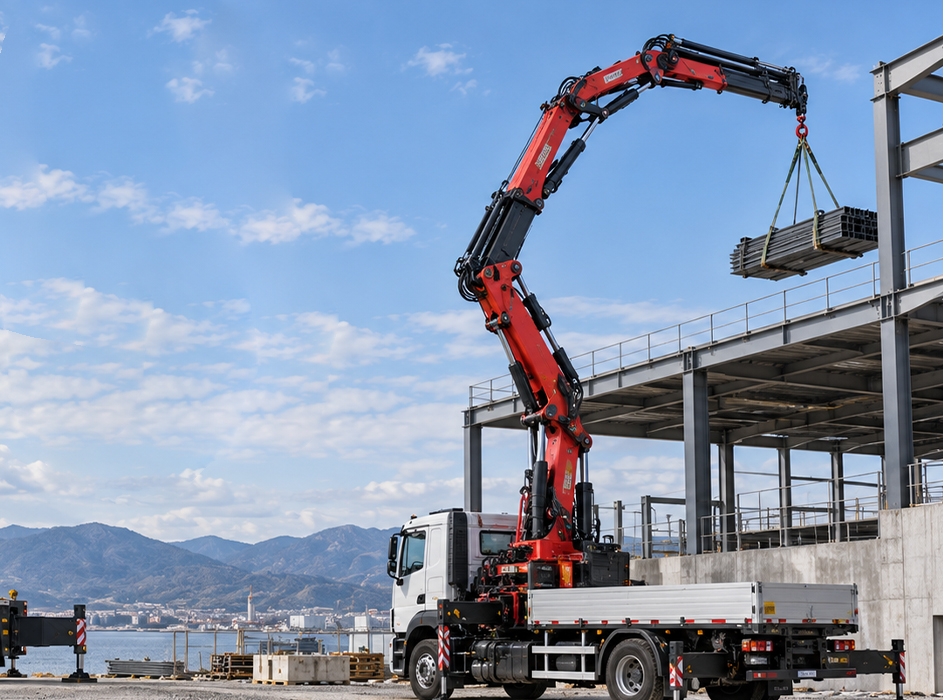
The folding-arm crane behind the cab. Called a loader crane in Europe and most of Asia, a knuckle boom crane or articulating crane in North America. Same machine. Remote functions are normally boom lift, boom extension, slew, winch, jib and outriggers — which is why a dual-axis joystick fits these cranes better than anything else. One lever handles extension and slew together, exactly how operators actually use them.
Straight telescopic boom on a carrier. These sit further from the load, so range matters more than anything. Our frequency-hopping link holds up at open-site distances [confirm: 100 m] even with other plant running nearby.
The compact crane on a field-service truck. Tight decks, roadside work, short cycles. A compact single-axis job like the BSJ10 keeps one hand free to steady things while the other works the boom.
Including older units. Age matters far less than what is sitting on the valve block — we cover that next.