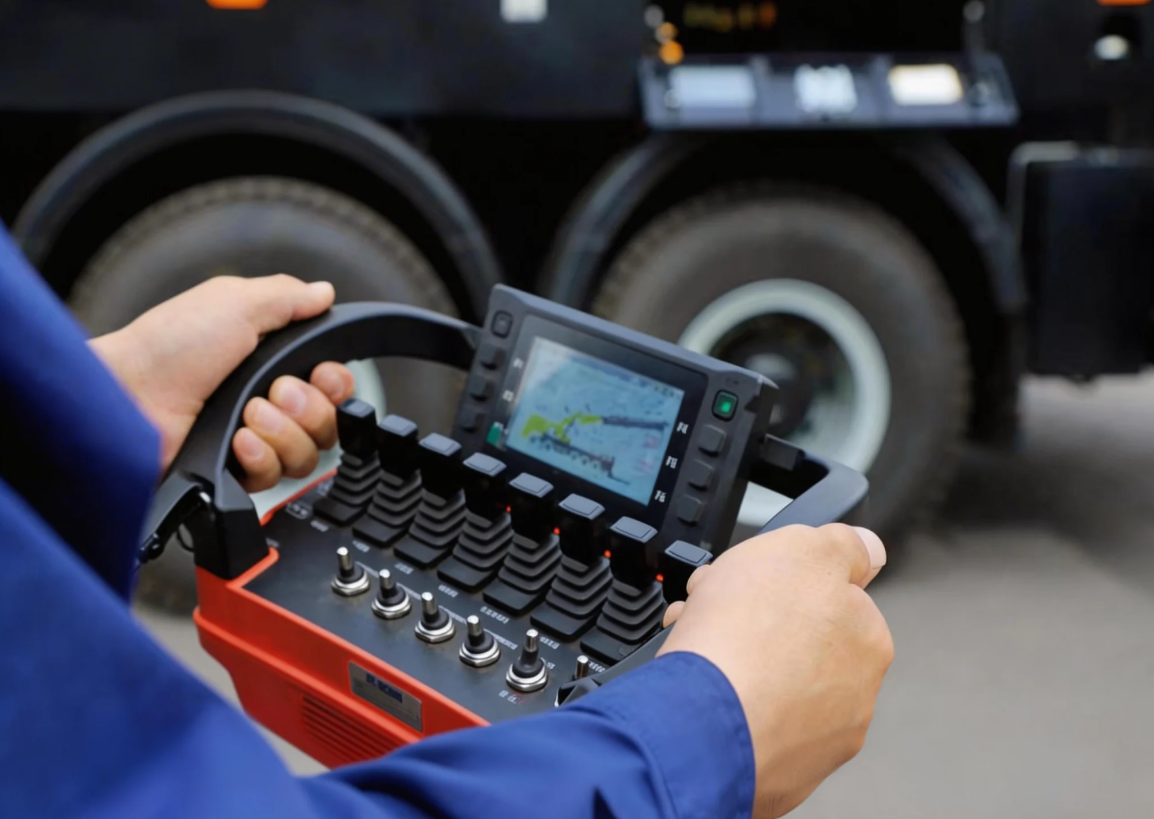
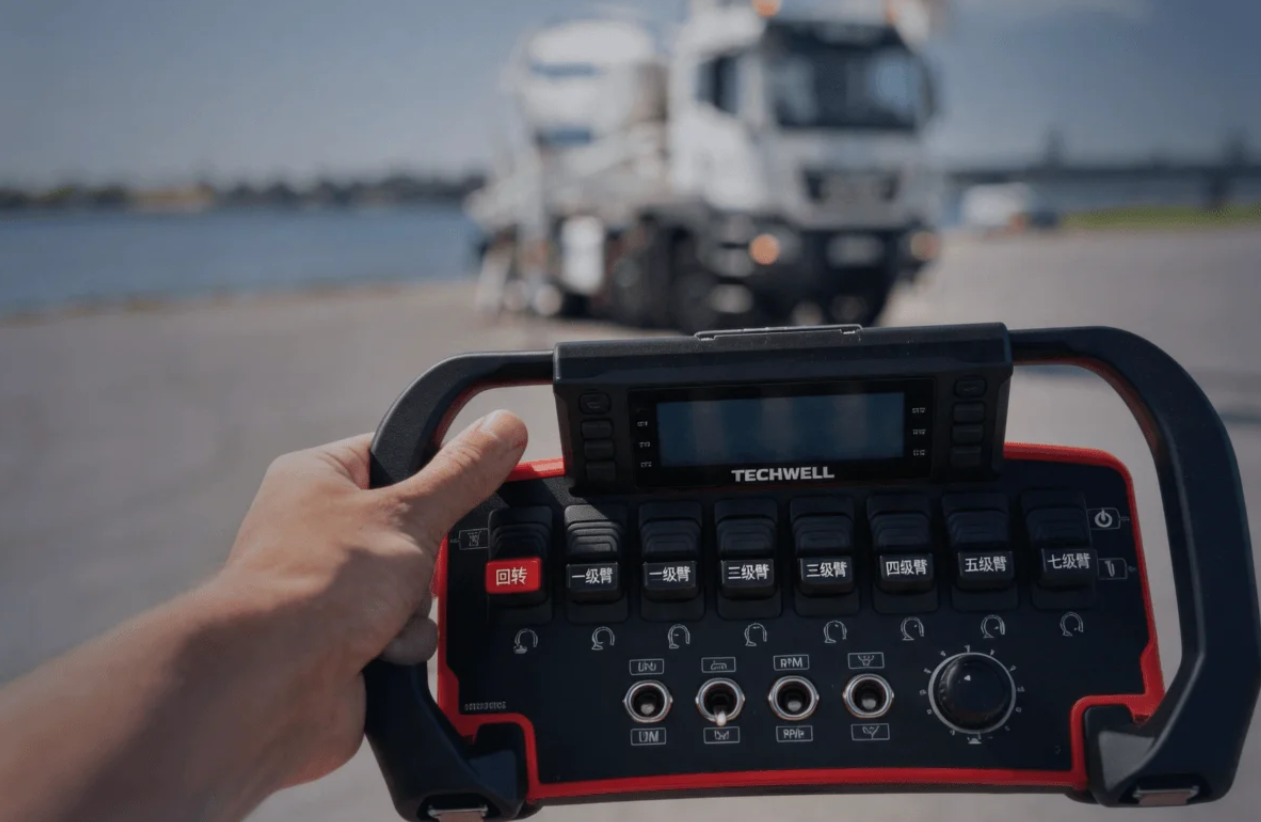
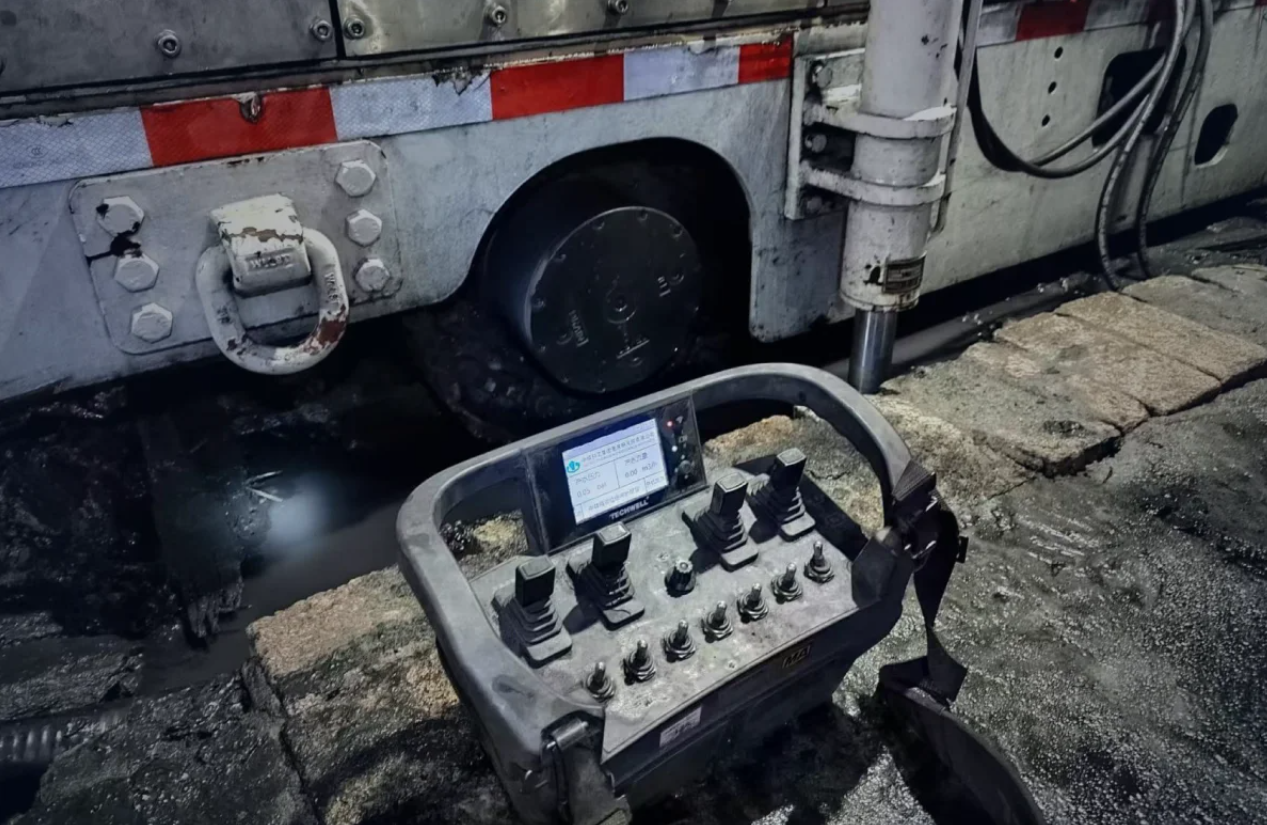
When a large load or equipment structure blocks the view from a fixed crane control position, an operator using a wireless crane transmitter can move to a safer spot with a clearer line of sight. This allows the operator to observe the hook, suspended load, landing point, and nearby obstacles or personnel from a more suitable position. Crane movement should stop while the operator relocates. Lifting can resume once visibility and communication are clear.
Wireless control technology provides equipment manufacturers with another method to design crane operation systems. By understanding application needs, businesses can select suitable control solutions that match equipment structure, working conditions, and operator requirements.
Remote Control and Operator Visibility in Crane Operations
Visibility is essential during crane operations. Operators need to monitor four key areas: the hook and lifting connection, the suspended load, the landing point, and nearby obstacles or personnel. If a load or structure blocks any critical sightline, stop crane movement and relocate to an approved position with a clearer view. If the load or landing point remains out of sight, pause the lift and coordinate with a designated signaler before resuming.
For crane manufacturers and system integrators, selecting an industrial transmitter requires attention to communication performance, operating conditions, and equipment compatibility. The solution should fit the specific application instead of focusing only on individual functions.
Remote control systems are often considered for environments where direct access to equipment is limited. They provide another operating method that can support different layouts in factories, workshops, and outdoor areas.
Wireless Technology in Lifting Equipment Applications
Cranes and hoists are used in many industrial fields, including manufacturing plants, logistics facilities, and construction projects. Different environments create different requirements for control systems, especially when operators need to maintain a suitable viewing position.
A wireless crane transmitter allows operators to control compatible crane functions remotely. For equipment suppliers, this type of control can support flexible equipment designs tailored to specific project requirements.
When evaluating wireless systems, businesses usually review factors such as signal stability, protection design, and operation methods. These considerations help companies understand whether a control solution matches the intended working environment.
Product Design Considerations for Crane Control
Industrial control products need to balance practical operation and environmental adaptability. Compact design, clear control functions, and suitable protection features are important factors when developing solutions for crane and hoist applications.
We provide industrial wireless control solutions for OEM and ODM projects in different equipment fields. Techwell Remote Control focuses on supporting business partners that need practical control products for industrial applications.
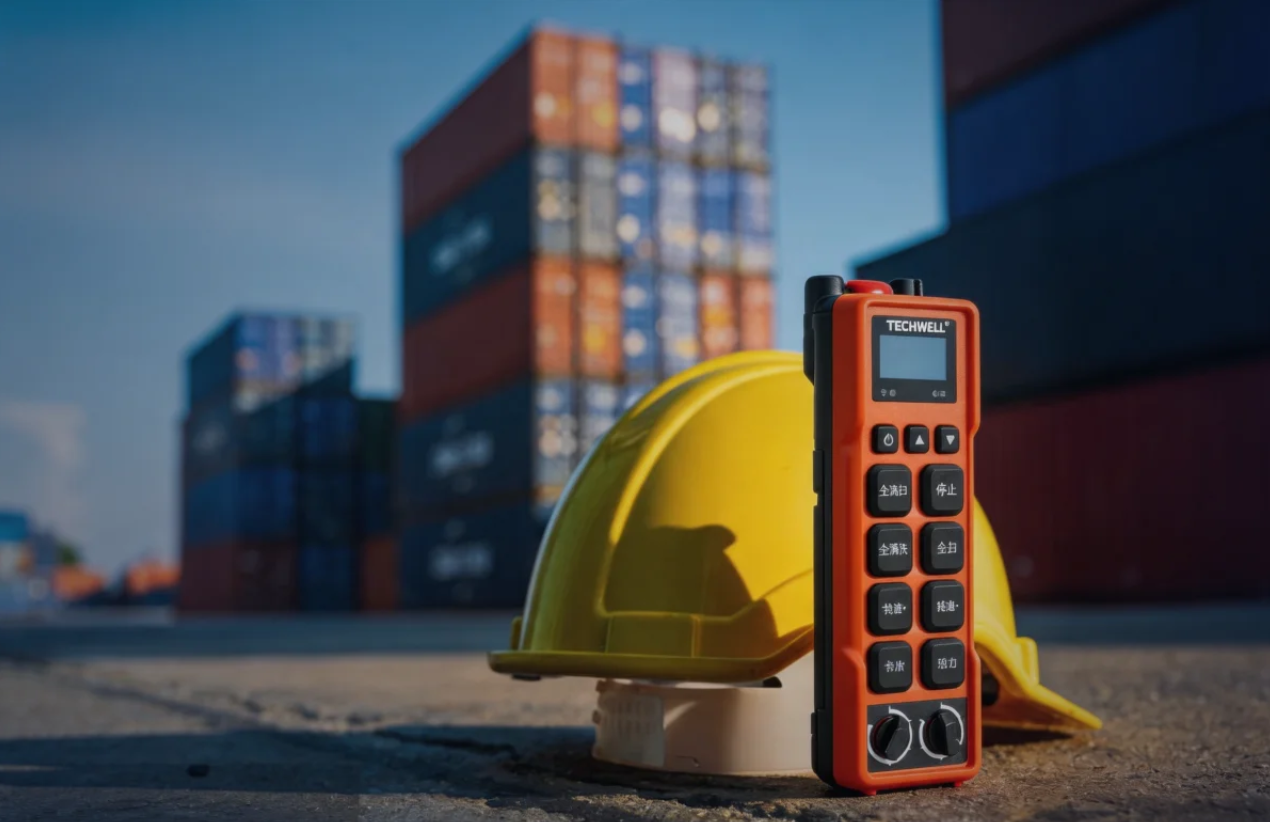
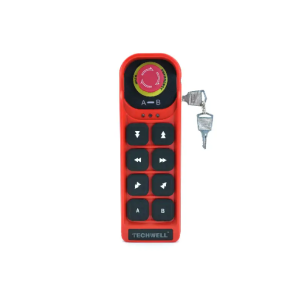
The BES08 is a compact industrial remote control transmitter designed for crane and hoist operation. It features eight single-speed pushbuttons, all of which are self-resetting, in a lightweight housing weighing 0.2 kg. The standard enclosure protection rating is IP65, with an option to reach IP67 for applications requiring a higher level of protection against dust and water. The button reset function does not, by itself, indicate an emergency-stop function.
The transmitter uses two standard AA batteries and operates within a temperature range of -25°C to 70°C. Measuring 190 × 63 × 45 mm, its compact design supports convenient handling during industrial operations. The rated wireless range is ≥150 m under the specified test conditions. Actual coverage may vary depending on obstacles and radio interference, so the signal range should be verified on site.
OEM and ODM Requirements for Industrial Applications
For OEM and ODM crane projects, customers should specify the required crane movements and control functions, such as hoisting, trolley travel, and bridge travel. They should also provide the equipment model, clear photos, and electrical drawings. These details help the supplier assess the receiver interface and determine the appropriate communication protocol for the crane control system, while considering the operator’s intended working positions and viewing needs.
Factors to Evaluate Before Selecting a Transmitter
Choosing a suitable control solution requires more than reviewing basic product specifications. Companies should consider equipment compatibility, maintenance needs, working conditions, and long-term application plans.
An industrial transmitter should be evaluated as part of the complete crane control system. Communication performance, protection design, and operation requirements all influence the final application result.
For projects involving cranes and hoists, businesses can review the complete control process before making decisions. A clear understanding of equipment requirements helps partners select solutions that support stable daily operation.
Check Compatibility With the Complete Crane System
Before selecting a transmitter, manufacturers should confirm that its button layout matches the crane’s required movements, such as hoisting, trolley travel, and bridge travel. They should also check the receiver’s communication protocol, signal output, and connection to the crane’s electrical control circuit. Required interlocks and emergency-stop functions need separate verification.
The crane model, equipment photos, and electrical drawings help suppliers assess these requirements. Buyers should also consider the installation environment, enclosure protection rating, and actual wireless coverage at the operating site. These checks help determine whether the transmitter and receiver configuration suits the complete crane system.
Supporting Flexible Crane Operations Through Better Control
Wireless crane transmitters can give operators more flexibility in choosing a viewing position. Wireless control does not eliminate blind spots, while it allows the operator to choose a more suitable observation position within permitted working areas and site procedures. If the hook, suspended load, landing point, or nearby personnel cannot be seen clearly, crane movement should stop until visibility and communication are restored.