Heavy industries operate under some of the most demanding environmental and mechanical conditions in the world. Ports, mining operations, and large-scale construction projects rely continuously on massive machinery to move raw materials and heavy structural loads. In these critical environments, traditional wired control interfaces often can restrict operator mobility and visibility, which may create additional operational challenges.
Modern industrial workflows demand untethered flexibility and uncompromising safety. Operators need to position themselves at the most advantageous vantage points to oversee complex maneuvers without physical limitations. Partnering with a specialized industrial remote control manufacturer allows enterprises to supplement or replace wired control pendants with reliable wireless systems engineered for challenging field connditions
Enhancing Maritime and Port Container Operations
Busy container terminals and dry bulk ports require continuous precision. Ship-to-shore cranes, reach stackers, and rail-mounted gantry cranes move dozens of tons in single lifting cycles. When operators remain confined to distant elevated cabs or short pendant cables, blind spots inevitably occur. These visual obstructions cause costly cargo collisions and loading delays.
Wireless control systems provide ship-to-shore operators with total situational awareness. An operator can walk along the quay, visually confirming container twist-lock engagement from ground level. This expanded visual perspective speeds up loading turnaround times significantly while preventing structural damage to vessel hulls and port infrastructure.
Furthermore, marine environments expose electronic equipment to continuous salt spray, high humidity, and extreme temperature fluctuations. Industrial wireless controllers built for ports feature specialized corrosion-resistant enclosures and robust internal shielding. This rugged construction prevents signal degradation, ensuring reliable radio communication even around dense metal container stacks.
Safeguarding Personnel in Mining Operations
Mining operations present severe physical hazards, including falling rocks, unstable ground, and hazardous airborne particulates. Heavy machinery like continuous miners, rock crushers, blast-hole drills, and underground loaders perform grueling tasks daily. Placing human operators inside equipment cabs in high-risk extraction zones exposes personnel to avoidable physical danger.
The implementation of industrial wireless radio remote controls transforms safety standards across surface and underground mines. By utilizing robust radio links, operators can control excavators and mobile crushers from a secure standoff distance.
Beyond physical safety, wireless control enhances operational efficiency in confined underground tunnels. Operators can navigate tight passages alongside the machine, making accurate steering corrections that prevent wall scrapes and mechanical stalls. This direct oversight reduces machine wear, prolongs equipment service life, and maintains steady extraction rates.
Improving Precision Across Dynamic Construction Sites
Modern construction sites are dense, fast-moving environments where multiple trades work simultaneously. Tower cranes, concrete boom pumps, and mobile gantry systems must maneuver materials across tight urban footprints. In traditional setups, crane operators rely entirely on two-way radio directions from ground signalmen to perform blind lifts.
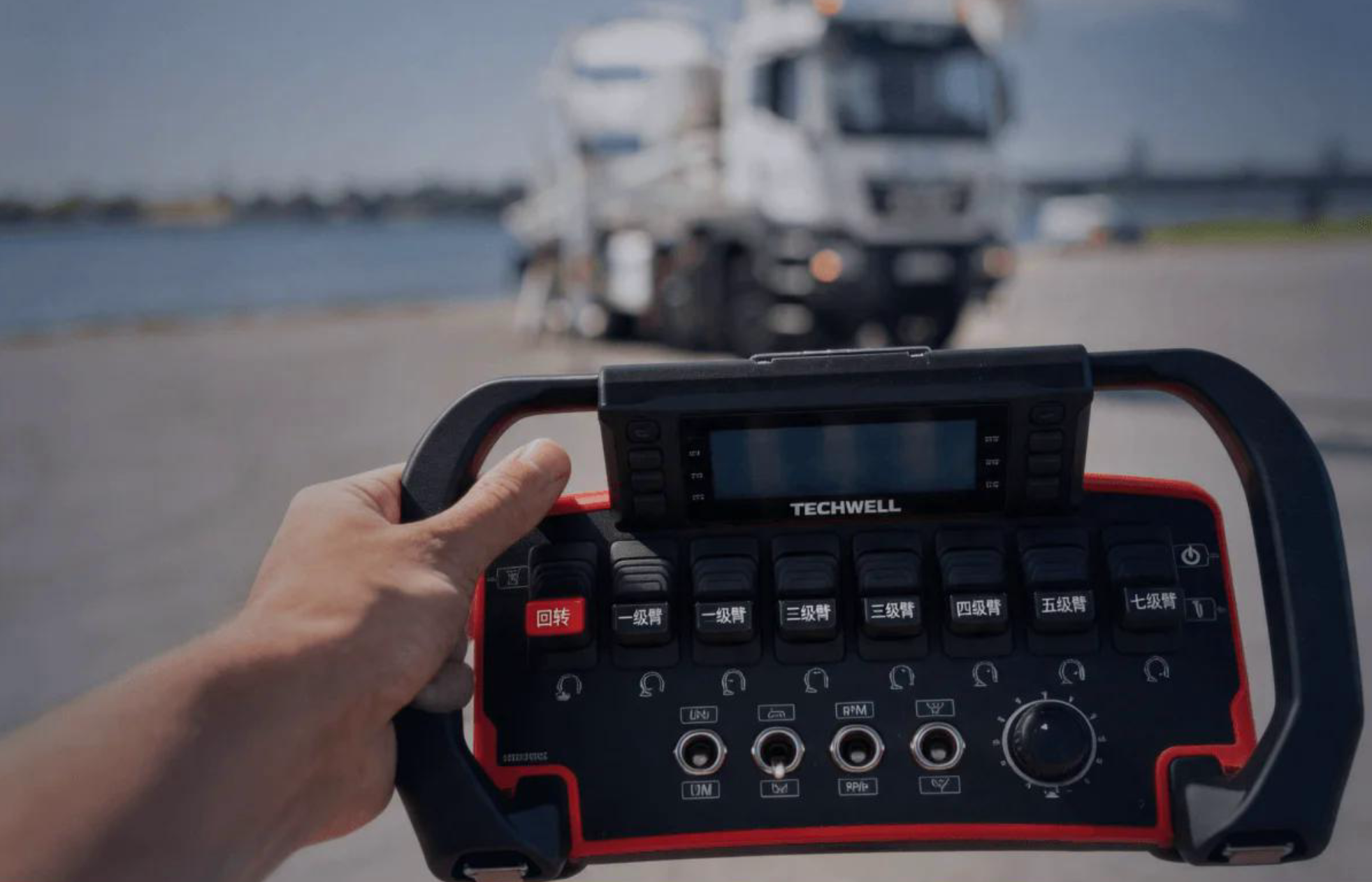
Wireless transmitters bridge this communication gap by placing direct machine control into the hands of personnel at the placement point. When pouring concrete or positioning precast beams, the operator stands directly beside the target area. This view eliminates miscommunication, shortens cycle times, and ensures millimeter precision.
Reduced crew coordination delays also lead to direct labor savings. Fewer dedicated spotters are needed to guide straightforward lifts, allowing site managers to allocate skilled labor to other critical tasks. Operations become safer, faster, and far more adaptable to shifting daily construction schedules.
Technical Specifications for Severe Environments
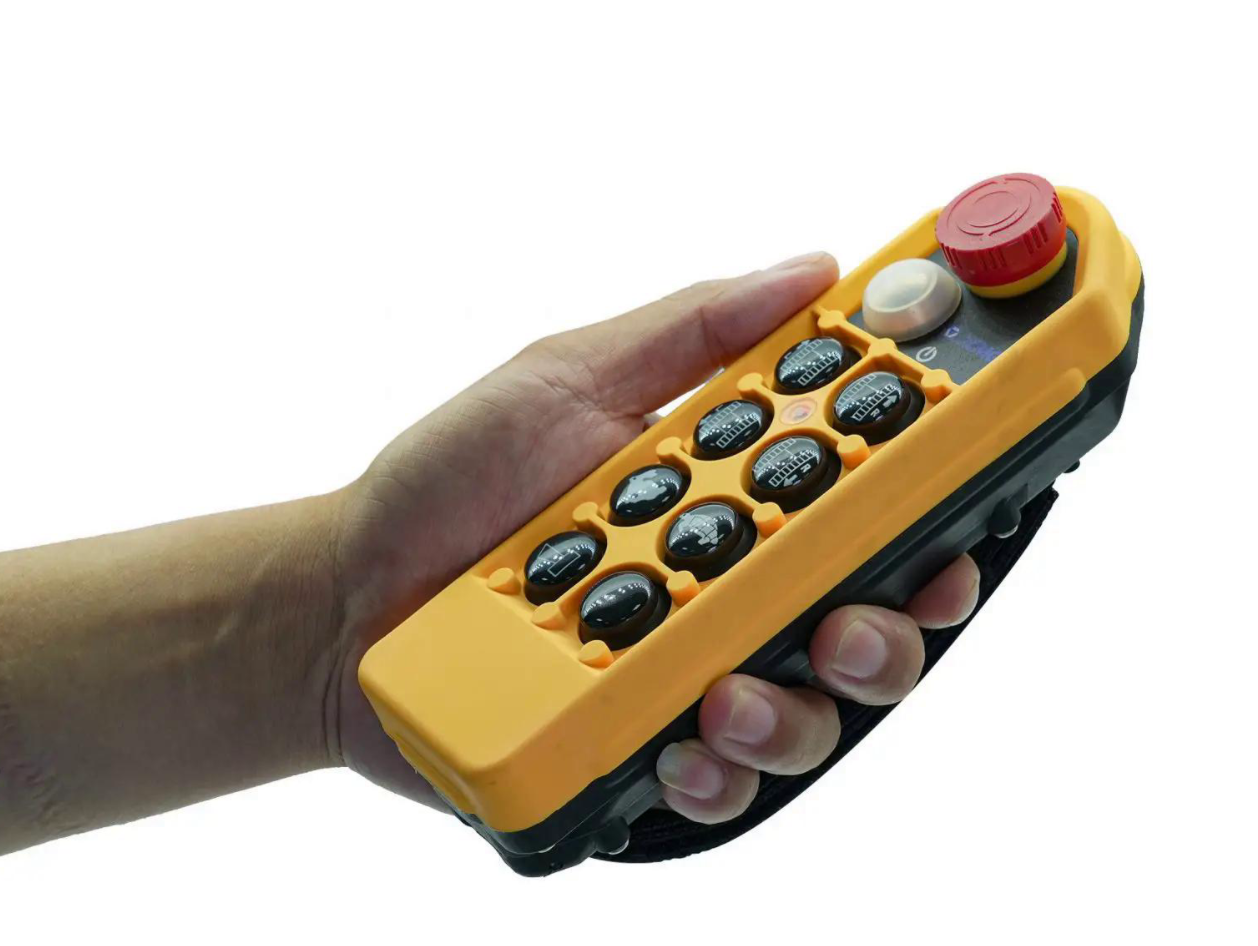
Commercial-grade wireless devices cannot survive the intense vibration, mechanical shock, and moisture found on industrial worksites. Heavy equipment demands purpose-built industrial hardware. Leading engineering teams design transmitters and receivers using heavy-duty reinforced housings capable of withstanding direct impacts and accidental drops on hard concrete.
Equipment longevity relies heavily on environmental ingress protection. High-performance systems feature certified IP65 protection ratings, ensuring internal electronic boards are completely sealed against high-pressure water jets and abrasive mineral dust. This comprehensive sealing ensures dependable operation through heavy rainstorms, coastal fog, and dusty demolition zones.
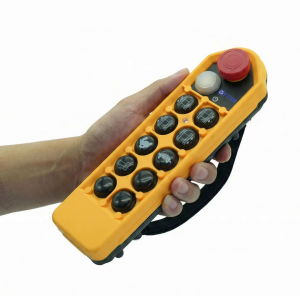
Safety architecture is another non-negotiable requirement. Certified industrial systems incorporate dedicated emergency stop switches with active safety relays. If an operator encounters an unexpected hazard or if signal loss occurs, the system automatically triggers an instantaneous machine halt. This failsafe mechanism protects personnel and high-value capital assets from catastrophic failure.
Custom Engineering: The Power of Techwell Remote Control Solutions
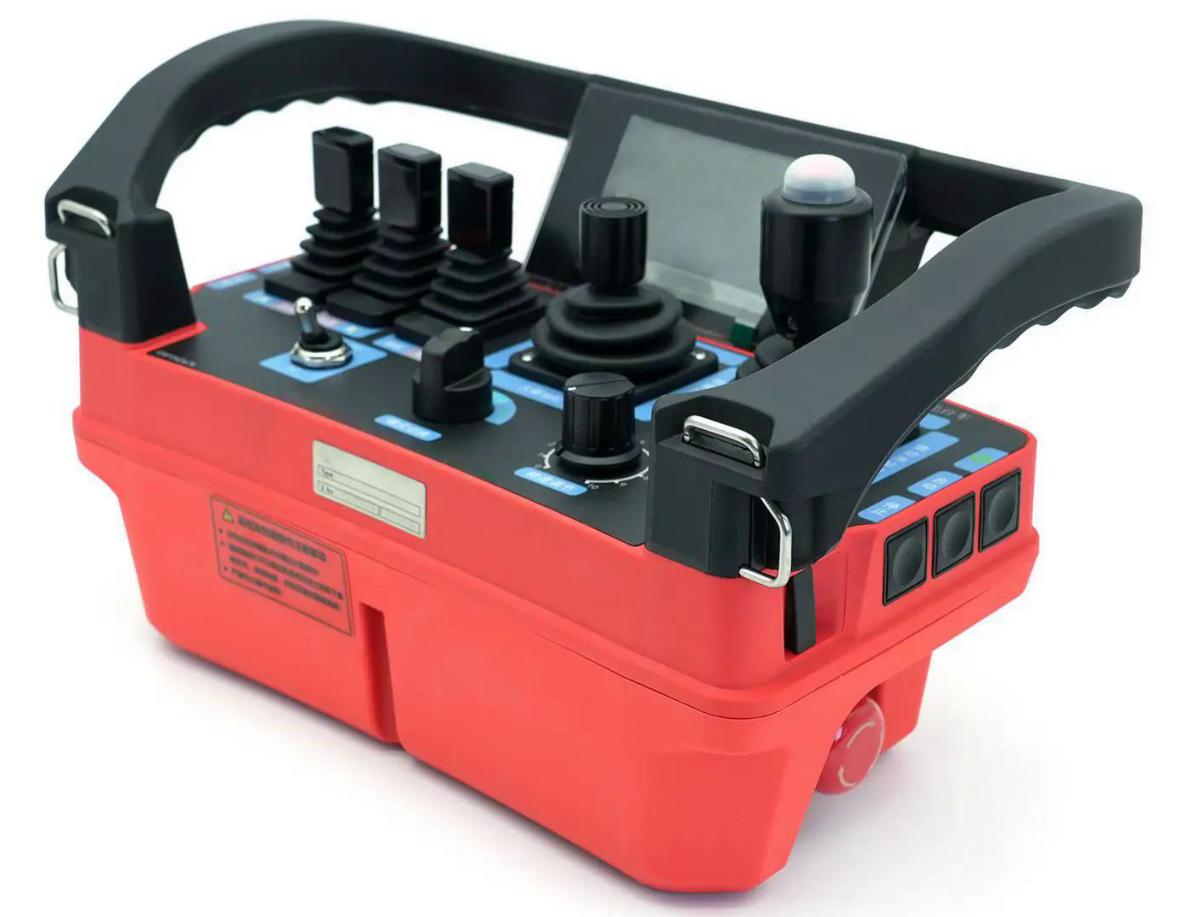
Every industrial sector utilizes distinct machinery configurations with specialized functional requirements. Off-the-shelf remote systems rarely accommodate the unique multi-axis joysticks, rotary switches, or custom proportional outputs demanded by specialized equipment builders. Original Equipment Manufacturers (OEMs) require tailored solutions to deliver seamless machine integration.
Collaborating on a specialized engineering project provides B2B clients with comprehensive OEM and ODM support. Dedicated engineering teams conduct independent research and technical consultations to build proprietary control layouts. From customized transmitter faceplates to specialized radio frequency programming, each unit matches exact mechanical and operational specifications.
These customized ODM services allow equipment manufacturers to deliver great user experiences. By incorporating brand-specific ergonomics, specialized software protocols, and modular receiver units, heavy machinery builders can differentiate their offerings in competitive global markets. Clients receive a durable, high-performance control solution that elevates the value of their machinery.
Driving Long-Term Industrial Productivity
As global industries push toward greater automation and enhanced workplace safety, the role of industrial wireless radio remote controls becomes increasingly vital. Eliminating wired constraints empowers operators to work faster, make safer decisions, and eliminate operational bottlenecks across ports, mines, and construction sites.
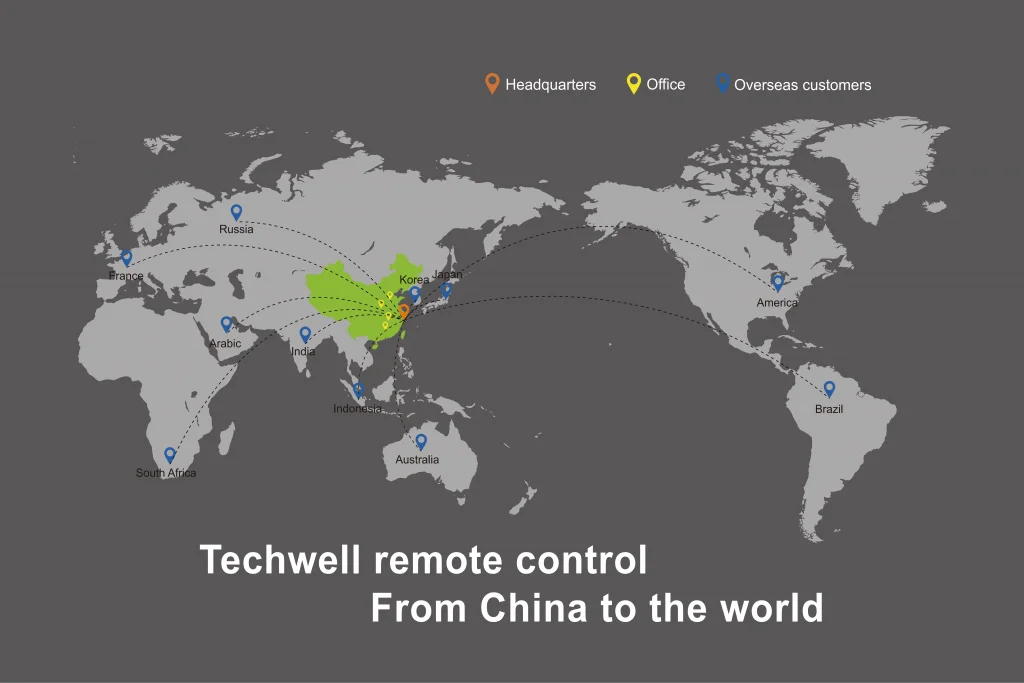
Selecting a trusted industrial remote control manufacturer ensures your facility benefits from proven durability, certified IP65 sealing, and responsive engineering support. Upgrading your machinery with a rugged Techwell Remote Control system delivers long-term resilience and productivity gains. Invest in advanced wireless solutions today to secure a safer industrial future.