Remote control technology is a ubiquitous part of modern life. Most people interact with consumer remote controls daily, operating televisions, garage doors, and home appliances. These commercial-grade devices prioritize lightweight convenience and low-cost mass production. However, when transitioning from a living room to a heavy construction site, these basic communication tools are entirely inadequate.
Managing heavy machinery requires a fundamentally different class of robust hardware. An industrial transmitter must guarantee absolute reliability in the most unforgiving environments on earth. A single dropped signal or delayed command in a factory can result in catastrophic workplace accidents and immense financial loss. Understanding the engineering gap between commercial and industrial devices is absolutely crucial for equipment builders.
The Demand for Uncompromising Environmental Durability
Consumer remotes are designed strictly for climate-controlled indoor environments. If dropped on a hard surface or exposed to moisture, their brittle plastic casings and unsealed circuit boards shatter or short-circuit immediately. Heavy industrial worksites present the exact opposite environmental conditions. Extreme mechanical vibration, abrasive dust, and unpredictable severe weather are constant daily realities for operators.
Industrial-grade controllers feature ultra-high-density plastic and aerospace-grade aluminum housings. These highly rugged enclosures achieve certified IP65 or IP66 ingress protection ratings globally. This comprehensive sealing ensures internal electronic assemblies remain fully protected against torrential rainstorms, coastal salt fog, and abrasive mineral dust. Internal shock-dampening mountings further protect delicate circuit boards from continuous heavy engine vibration.
Scenario 1: The Role of an industrial remote control transmitter in Steel Mills
Steel fabrication plants present an incredibly hostile environment for any electronic device. Overhead bridge cranes transport thousands of pounds of molten metal across busy assembly floors. The environment is heavily saturated with high ambient heat, splashing slag, and severe electromagnetic interference generated by continuous arc welding and high-voltage power transformers.
A standard wireless signal would be instantly overwhelmed by this intense electromagnetic smog. However, an industrial remote control transmitter overcomes these aggressive obstacles through advanced frequency-hopping spread spectrum technology. The control system continuously scans the local radio spectrum, automatically switching to a clean channel if it detects dangerous ambient interference.
This dynamic frequency agility ensures that every critical command reaches the crane’s receiver without a single millisecond of latency. The operator can stand safely at a distance, maintaining completely smooth proportional control over the hoisting mechanism. This vital spatial separation protects workers from dangerous heat and accidental metal splashes while significantly accelerating daily production cycles.
Advanced Safety Architecture and Failsafe Protocols
When a consumer remote control fails to change a television channel, the result is merely a minor personal annoyance. If an overhead crane remote loses connection while suspending a massive steel girder, the consequences are immediately life-threatening. Therefore, functional safety architecture is the most critical distinction separating basic commercial devices from professional heavy machinery interfaces.
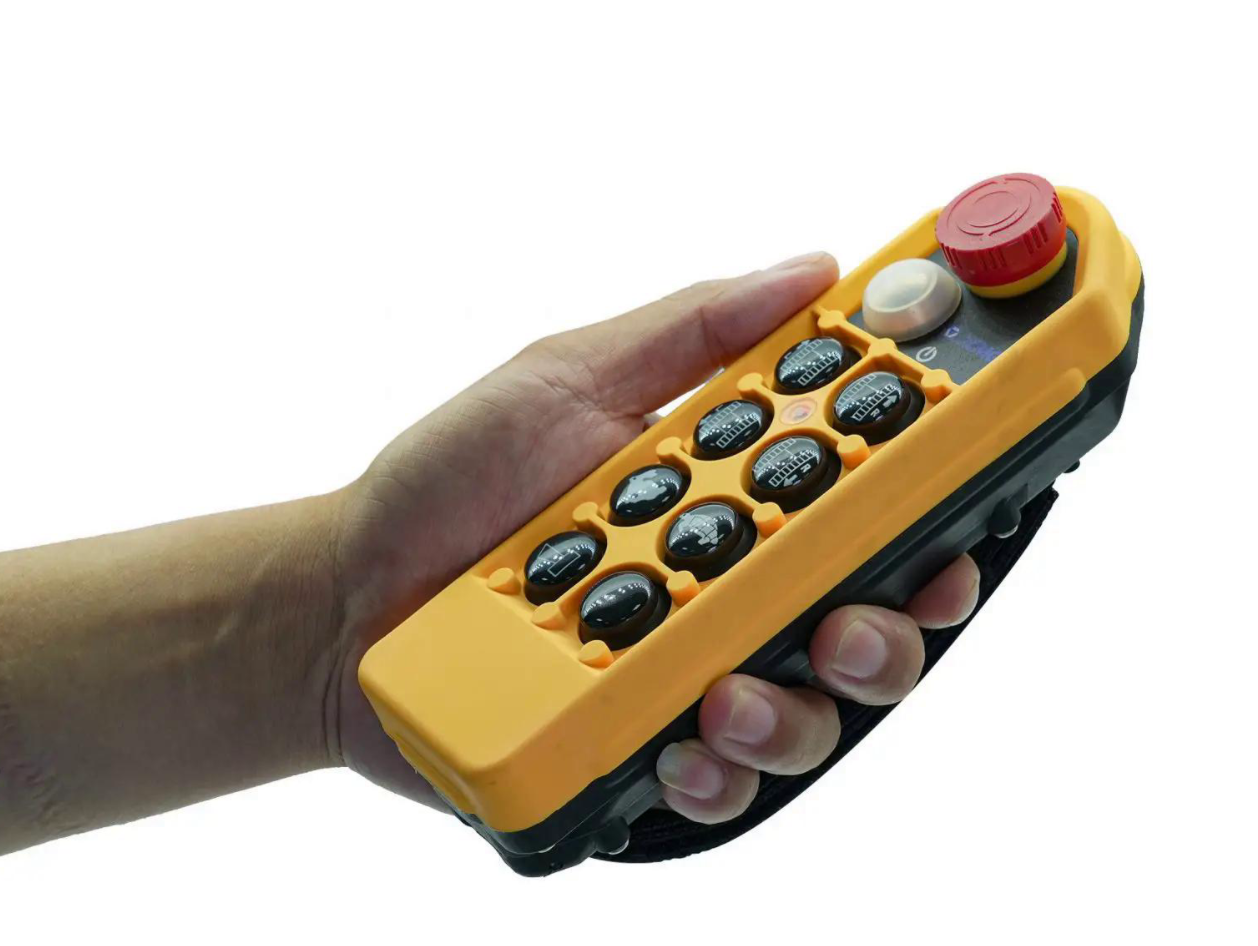
Industrial systems incorporate redundant dual-channel microprocessor architectures with cross-diagnostic capabilities. They continuously monitor radio signal integrity, transmitter battery voltage, and internal hardware health throughout the shift. Furthermore, every certified professional transmitter includes a prominent, active emergency stop pushbutton designed for immediate, reflexive access during unexpected operational emergencies on the floor.
If persistent radio interference occurs or a vital internal component fails, the machine’s receiver automatically executes a failsafe shutdown within milliseconds. This automated safety protocol instantly halts all mechanical motion, successfully protecting nearby workers and expensive infrastructure from erratic or uncontrolled machinery movements during highly critical and heavy load transfers.
Scenario 2: Precise Multi-Function Control for Concrete Pumps
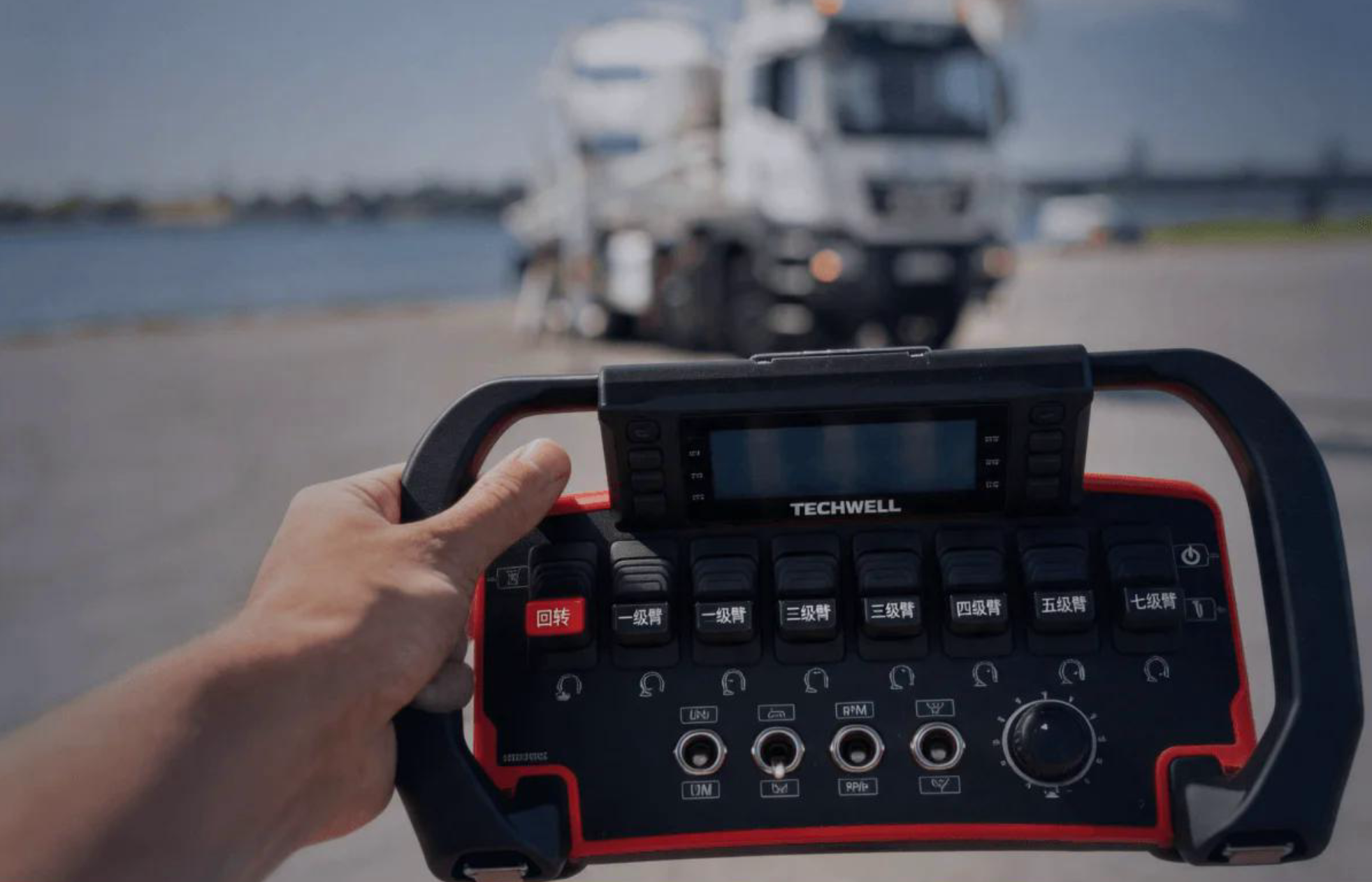
Modern construction relies heavily on complex multi-function machinery, such as mobile concrete boom pumps. Delivering wet concrete accurately requires continuous coordination between the vehicle engine, hydraulic pumps, and a multi-section placing boom. Consumer electronics only send basic binary, on-or-off commands. Operating complex hydraulic valves requires far more sophisticated, continuous analog input from the operator.
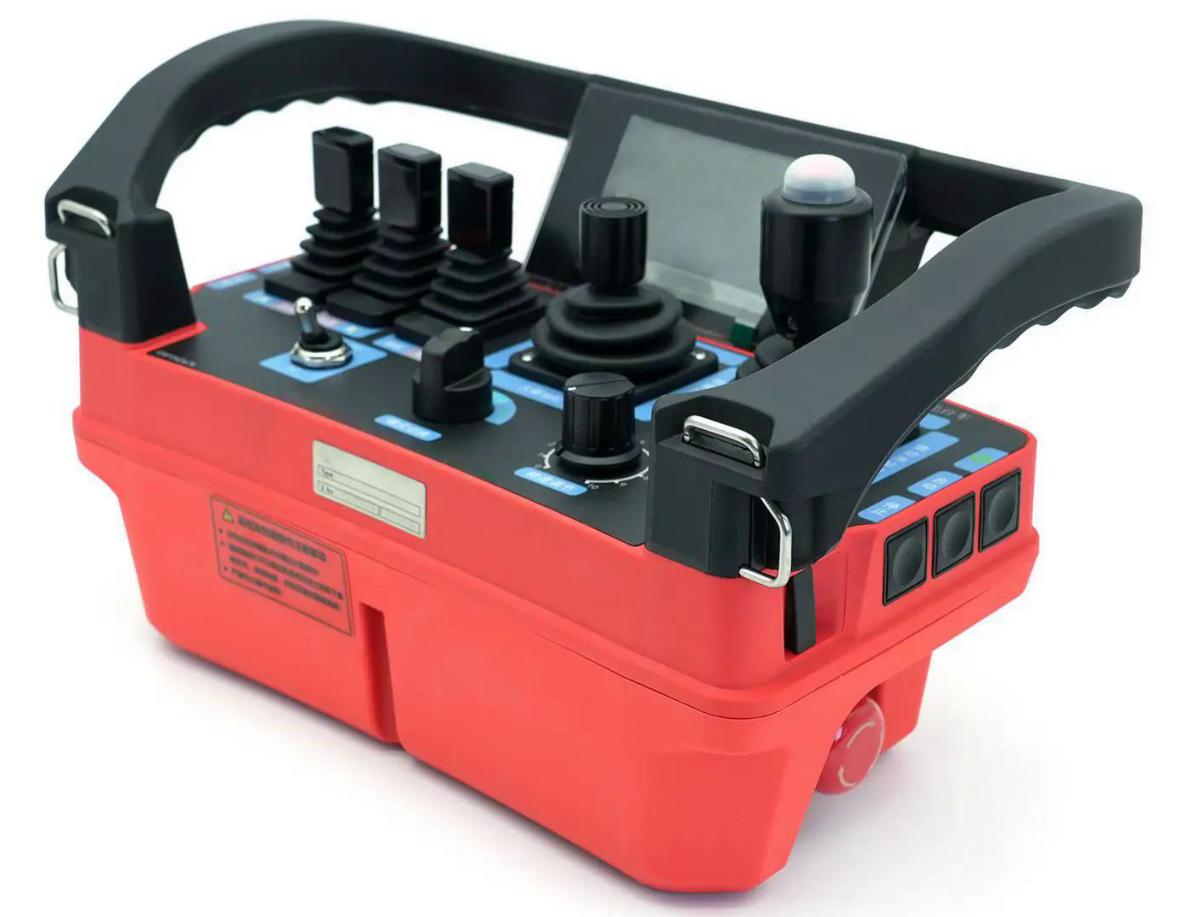
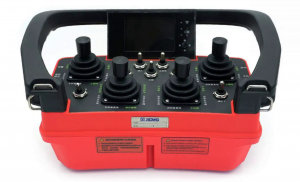
Professional transmitters utilize high-precision, multi-axis joysticks that provide incredibly fluid proportional control. Internal non-contact sensors constantly measure the exact angle of the operator’s hand deflection. This precise measurement translates directly into proportional hydraulic valve adjustments, ensuring exceptionally gentle boom movements. Operators can feather hydraulic speeds effortlessly, neutralizing dangerous pendulum inertia completely and preventing costly structural damage.
Additionally, these advanced industrial controllers often feature high-definition LCD monitoring screens. These bright displays provide real-time telemetry data back to the operator, including precise battery status, radio signal strength, and live hydraulic pressure feedback. This bidirectional data exchange empowers operators to make critical mechanical decisions instantly without ever stepping foot inside a restrictive vehicle cabin.
Tailored OEM and ODM Engineering Solutions
Consumer remote controls are built universally for mass retail markets. A single model is shipped globally with fixed, entirely unchangeable button layouts. In sharp contrast, every category of heavy machinery features entirely unique hydraulic circuits, proprietary CAN-bus network protocols, and specific operational workflows. Original equipment manufacturers require highly tailored engineering partnerships to achieve flawless electrical integration.
Dedicated engineering teams collaborate directly with machinery builders to provide comprehensive OEM and ODM support. Equipment designers can fully customize transmitter faceplates, select specialized ergonomic enclosures, and program application-specific software mapping from the ground up. This bespoke engineering ensures the resulting wireless control system matches the heavy machine’s unique mechanical specifications perfectly.
Building a Safer Industrial Future
The engineering gap between consumer electronics and professional machine interfaces is vast. Heavy machinery builders cannot compromise on hardware quality, as the safety of global worksites depends directly on incredibly reliable communication links. Transitioning to untethered, highly durable control systems empowers industrial workers to choose the safest possible vantage points across every single demanding shift.
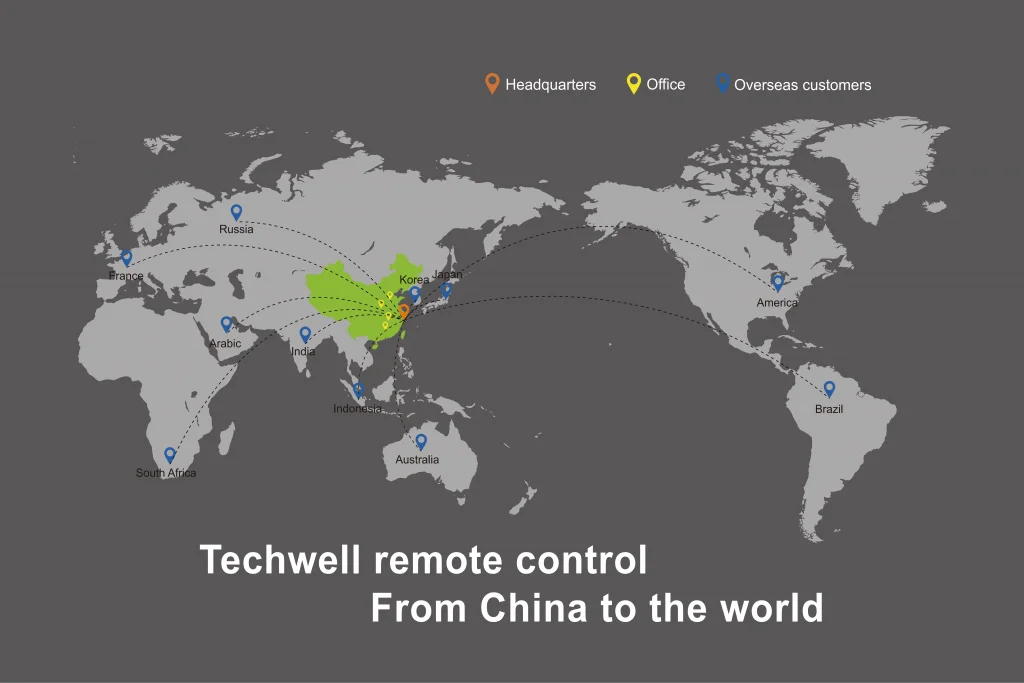
Integrating a premium, highly customized Techwell Remote Control system elevates the overall brand value of your manufactured heavy machinery. With dual-channel safety architecture and IP66-rated durability, B2B clients receive unmatched operational reliability globally. Investing in purpose-built industrial technology successfully protects your workforce while building a faster, smarter, and far more profitable operational future worldwide.