Industrial machinery is undergoing rapid technological evolution across modern manufacturing and heavy infrastructure projects. Hydraulic systems, electric drives, and multi-axis booms now perform highly complex mechanical movements. To maximize these advancements, operators require control interfaces that deliver seamless precision, natural responsiveness, and unmatched situational awareness across challenging worksites.
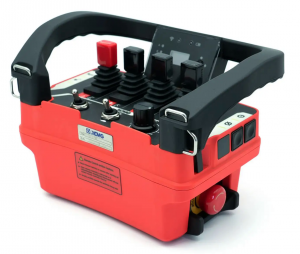
Traditional push-button stations often limit operators to stepped, discrete speed settings. When maneuvering multi-ton structural components or handling delicate loads, sudden acceleration steps can induce severe mechanical stress. Upgrading to a versatile industrial transmitter equipped with proportional joysticks eliminates these abrupt transitions, providing operators with fluid and precise speed regulation.
By transitioning from fixed, stepped inputs to intuitive proportional control, industrial facilities significantly improve operational accuracy. Operators gain the ability to feather hydraulic movements smoothly, preventing component collision risks and protecting valuable machinery. This ergonomic evolution redefines how human operators interact with heavy industrial equipment daily.
The Shift from Discrete Pushbuttons to Proportional Joysticks
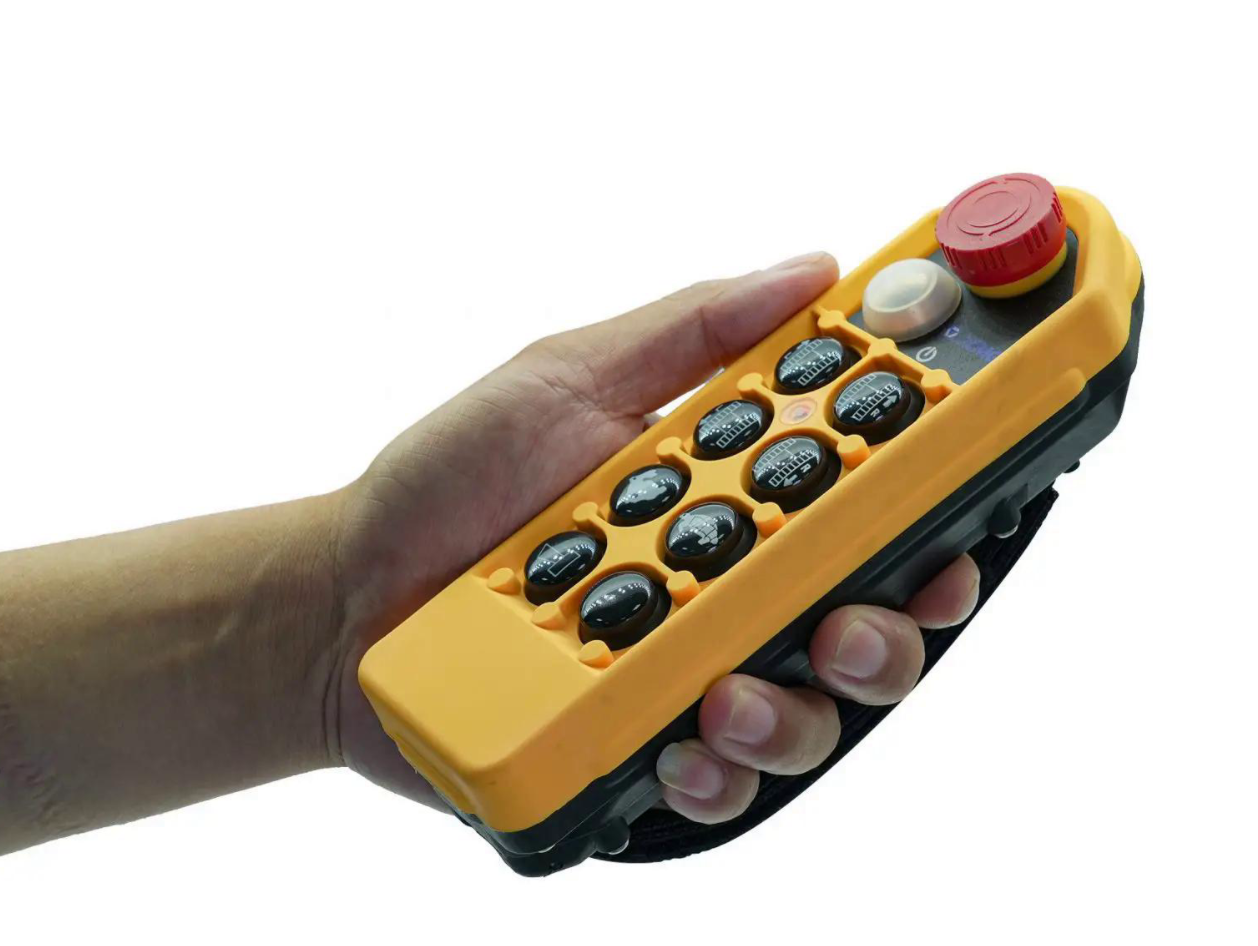
For decades, industrial remote interfaces relied predominantly on multi-step pushbuttons. While pushbutton units remain effective for simple on-off actions, they struggle with intricate, multi-axis motions. In systems that use stepped speed inputs, operators move between predefined control levels, which may provide less fine-grained control during lifting operations.
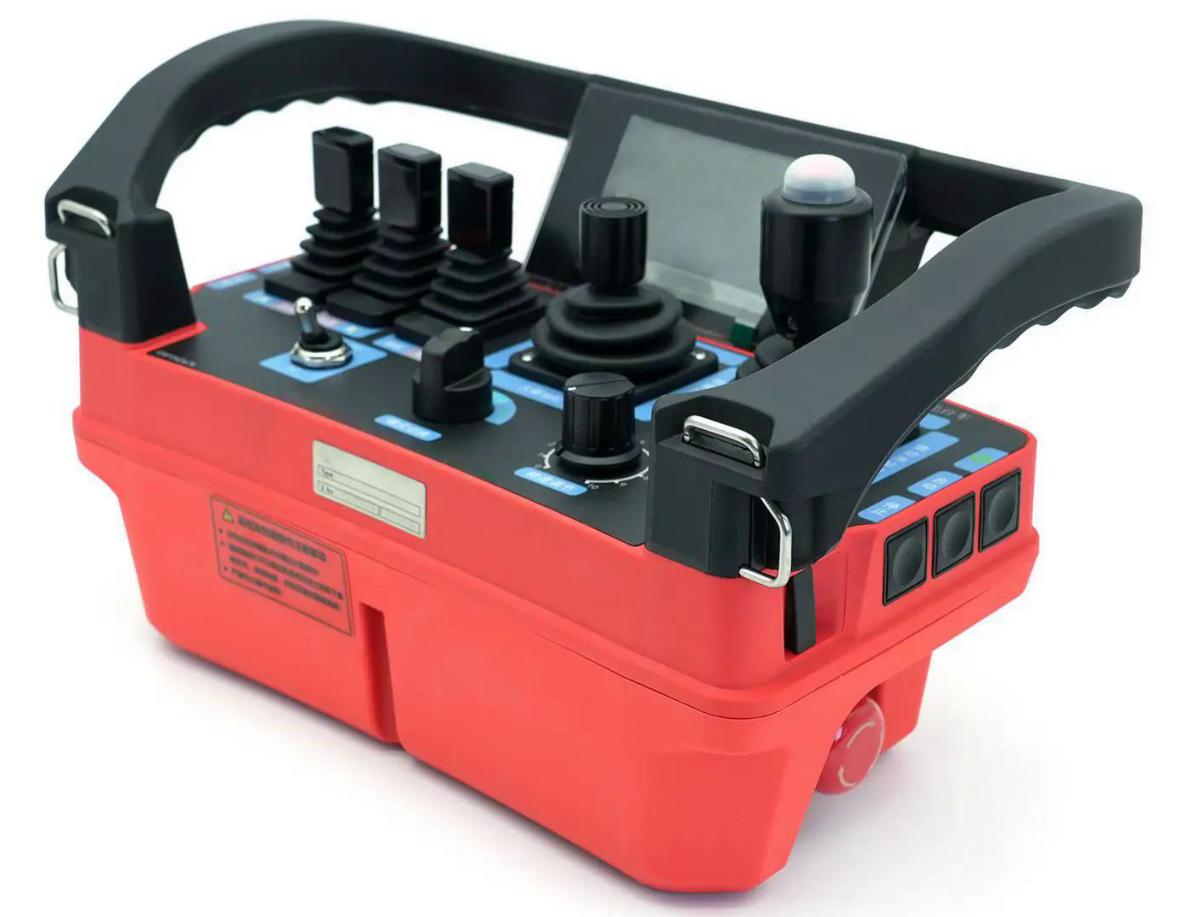
In contrast, modern joysticks provide continuous, 360-degree analog deflection. Internal non-contact sensors measure the exact angle and displacement applied by the operator’s hand. This measurement translates directly into proportional hydraulic valve opening or variable motor frequency adjustments, ensuring gentle starting and stopping motions.
Furthermore, joystick ergonomics drastically reduce operator hand fatigue during extended shifts. Instead of repeatedly pressing stiff buttons with thumb pressure, operators guide multi-axis joysticks using natural wrist and forearm motions. This ergonomic advantage prevents repetitive strain injuries while maintaining high operator alertness throughout long operating shifts.
Scenario 1: Precision Overhead Crane Maneuvers in Heavy Metallurgy
Steel mills and heavy metallurgy plants operate under extreme thermal and environmental conditions. Overhead charging cranes and ladle transfer equipment handle heavy slabs and molten-metal ladles in demanding production environments. Maneuvering these massive loads above active work areas requires millimetric positioning accuracy.
When an operator maneuvers an overhead crane via stepped buttons, sudden torque changes can cause liquid metal splashing or structural swinging. A single misjudged movement risks catastrophic asset damage or severe worker injury. Precision handling in these high-stakes environments is completely non-negotiable.
Proportional joysticks allow crane operators to initiate ultra-slow micro-movements when aligning ladles over casting molds. The operator can accelerate or decelerate with complete fluidity, neutralizing pendulum inertia entirely. This high-precision handling accelerates furnace charging cycles while maintaining uncompromising safety standards across the facility floor.
Scenario 2: Multi-Axis Hydraulic Excavation and Demolition
Modern demolition and foundation excavation rely heavily on multi-attachment excavators. A single machine often coordinates simultaneous boom elevation, arm extension, bucket rotation, and hydraulic crusher articulation. Managing these interconnected hydraulic circuits requires seamless multi-channel command execution.
Deploying an advanced joystick remote control system provides operators with simultaneous multi-axis authority. Using dual multi-axis joysticks on a lightweight belly-pack console, the operator coordinates compound hydraulic functions effortlessly with two hands. This intuitive layout mimics natural machine kinematics, reducing cognitive fatigue during complex demolition sequences.
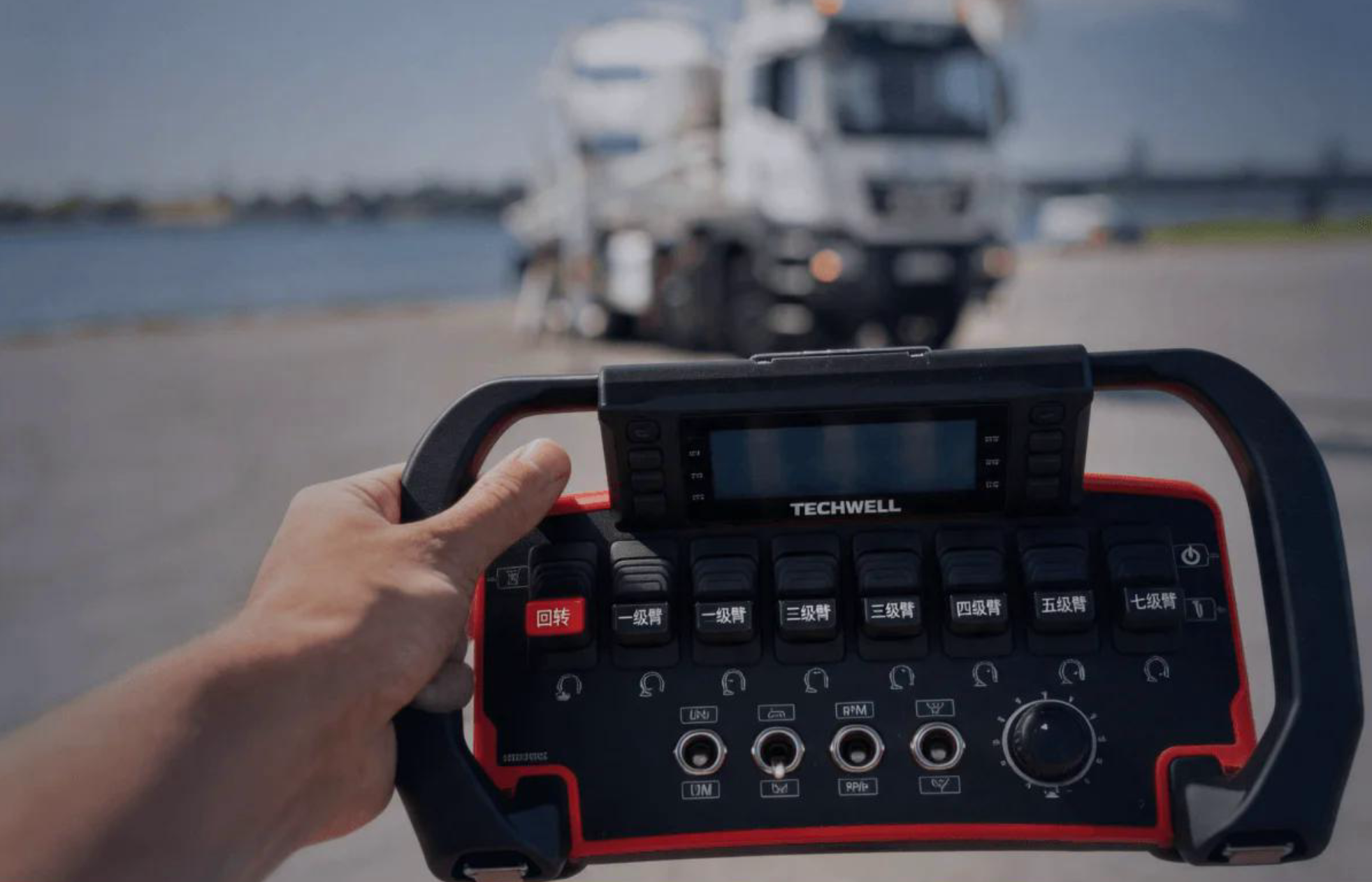
Furthermore, untethered joystick consoles allow operators to stand well outside dangerous structural collapse zones. From an elevated, dust-free vantage point, the operator maintains a direct line of sight to the working tool and surrounding structures. This optimal positioning prevents accidental wall collisions and extends hydraulic component longevity.
Rugged Design and Ingress Protection Standards
Heavy industrial worksites subject control electronics to extreme environmental abuse, including torrential rainfall, conductive metal dust, and intense mechanical vibration. Commercial-grade controllers quickly degrade under these demanding conditions. Heavy machinery demands purpose-built industrial hardware engineered to withstand severe physical punishment.
Techwell joystick transmitters are available with model-specific IP-rated protection, including IP66 configurations. High-grade rubber bellows and internal magnetic shielding completely seal internal potentiometer and Hall-effect mechanisms against moisture, abrasive silica dust, and corrosive vapors. This robust sealing prevents sensor degradation and unexpected electronic failures.
Functional safety architecture remains equally essential for heavy machinery operation. Certified systems incorporate dedicated emergency stop switches and redundant dual-microprocessor safety circuits. If radio signal degradation occurs, the receiver automatically de-energizes all proportional safety relays within milliseconds, bringing supported machine functions to a defined safe state.
Custom OEM and ODM Engineering for Machine Builders
Every heavy machinery platform utilizes distinct hydraulic architectures, electrical interfaces, and operational profiles. Off-the-shelf control units rarely accommodate the proprietary proportional curves, custom detents, or CAN-bus protocols demanded by original equipment manufacturers. Tailored engineering partnerships are essential for achieving seamless machine integration.
Collaborating directly with an engineering specialist provides B2B equipment builders with comprehensive OEM and ODM support. Dedicated technical teams customize joystick spring resistance, configure application-specific button legends, and program tailored serial communication protocols. This collaborative approach guarantees that the integrated Techwell Remote Control system matches the machine’s exact mechanical specifications.
These tailored ODM services allow heavy equipment manufacturers to deliver superior, market-ready products to international markets. Integrating private-label ergonomic enclosures and precision electronics elevates brand prestige and enhances machine marketability. Equipment builders can provide industrial end-users with application-specific functionality and durable wireless control solutions.
Elevating Modern Industrial Operational Standards
The growing adoption of joystick interfaces represents a permanent transformation in modern industrial machine operation. By replacing rigid, stepped inputs with intuitive proportional control, joystick systems empower operators to execute delicate, high-risk maneuvers with unprecedented confidence and precision.
Industrial enterprises that adopt rugged, customized joystick solutions protect their workforce, reduce mechanical maintenance costs, and maximize worksite efficiency. Investing in high-performance wireless technology ensures your industrial operations remain productive, safe, and ready for future challenges.