Industrial automation is evolving at an unprecedented pace. Heavy machinery across manufacturing, construction, and logistics is becoming smarter, faster, and more versatile. However, the true efficiency of any advanced machine still depends directly on the operator interface. As machinery evolves, the physical and electronic tools used to control these systems must advance as well.
In response to modern workplace challenges, industrial hardware design has undergone a major transformation. Machinery builders are shifting away from heavy, rigid interfaces toward lightweight, intuitive, and highly durable wireless devices. Collaborating with a forward-thinking industrial remote control manufacturer allows heavy equipment builders to stay ahead of these evolving ergonomic, safety, and technological benchmarks.
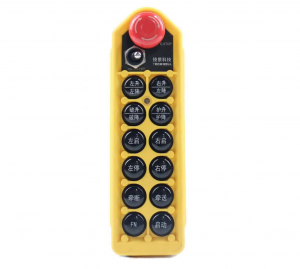
Ergonomics and Human-Centered Enclosure Design
For many years, traditional industrial pendants were heavy, cumbersome, and difficult to manipulate over long shifts. Continuous operation often led to repetitive strain injuries and physical fatigue among operators. When workers experience physical discomfort, their reaction times slow down, increasing the likelihood of workplace errors.
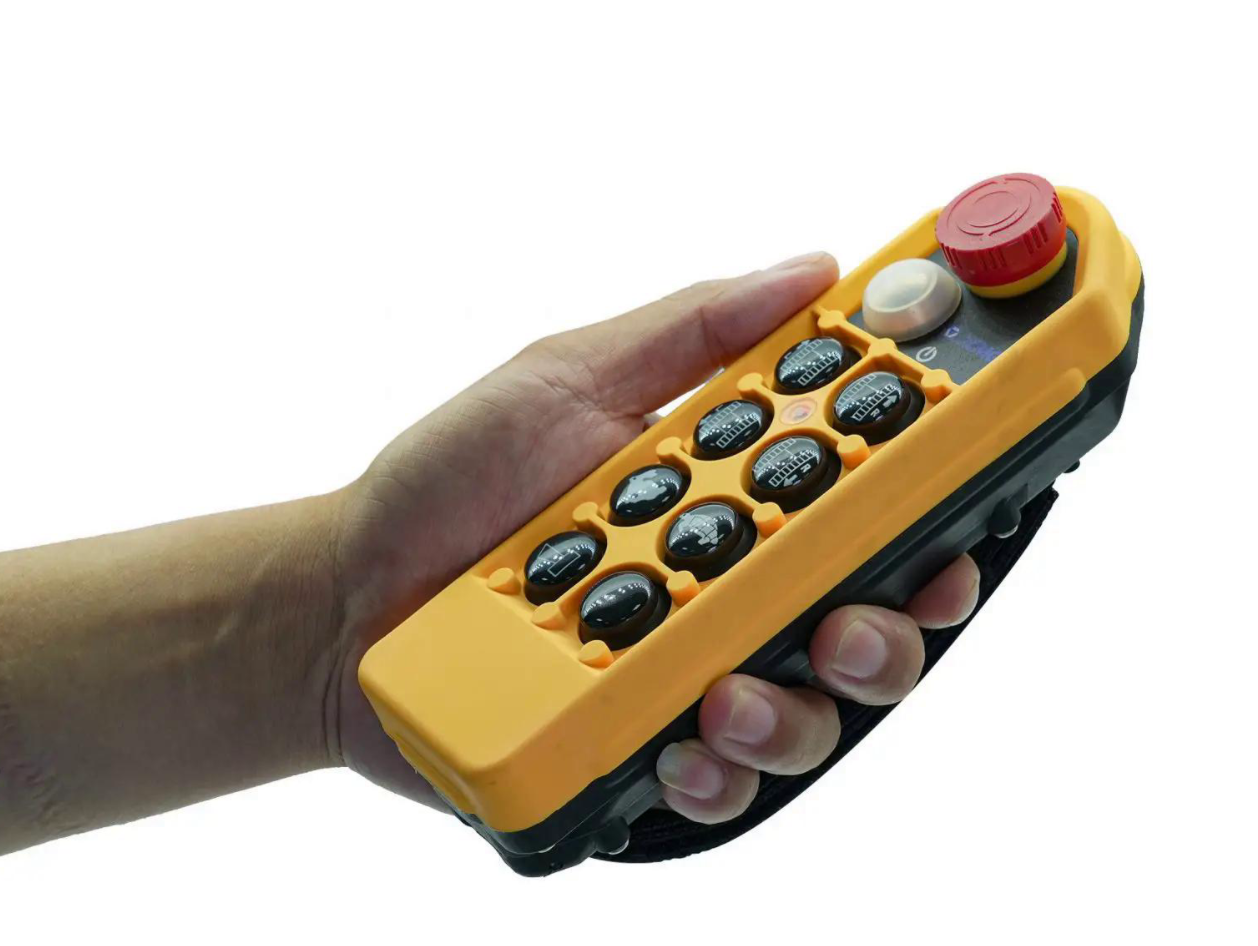
Modern design philosophy places human ergonomics at the center of hardware development. Contemporary transmitters utilize lightweight, impact-resistant polymer composites that significantly reduce carrying weight. Belly-pack units feature padded harness systems that distribute weight evenly across the torso, minimizing strain on the lower back and shoulders during extended shifts.
Furthermore, button and joystick placement has become far more intentional. Modern controls provide tactile resistance optimized for operators wearing thick industrial gloves. This design refinement gives operators precise mechanical feedback without requiring them to look down constantly at their hands during delicate maneuvers.
Scenario 1: Precast Concrete and Structural Placement
The benefits of ergonomic design become immediately apparent in precast concrete manufacturing yards. In these facilities, overhead bridge cranes transport massive architectural concrete panels across crowded casting bays. Moving these heavy panels requires delicate, continuous micro-adjustments to align mounting pins accurately without damaging fragile concrete edges.
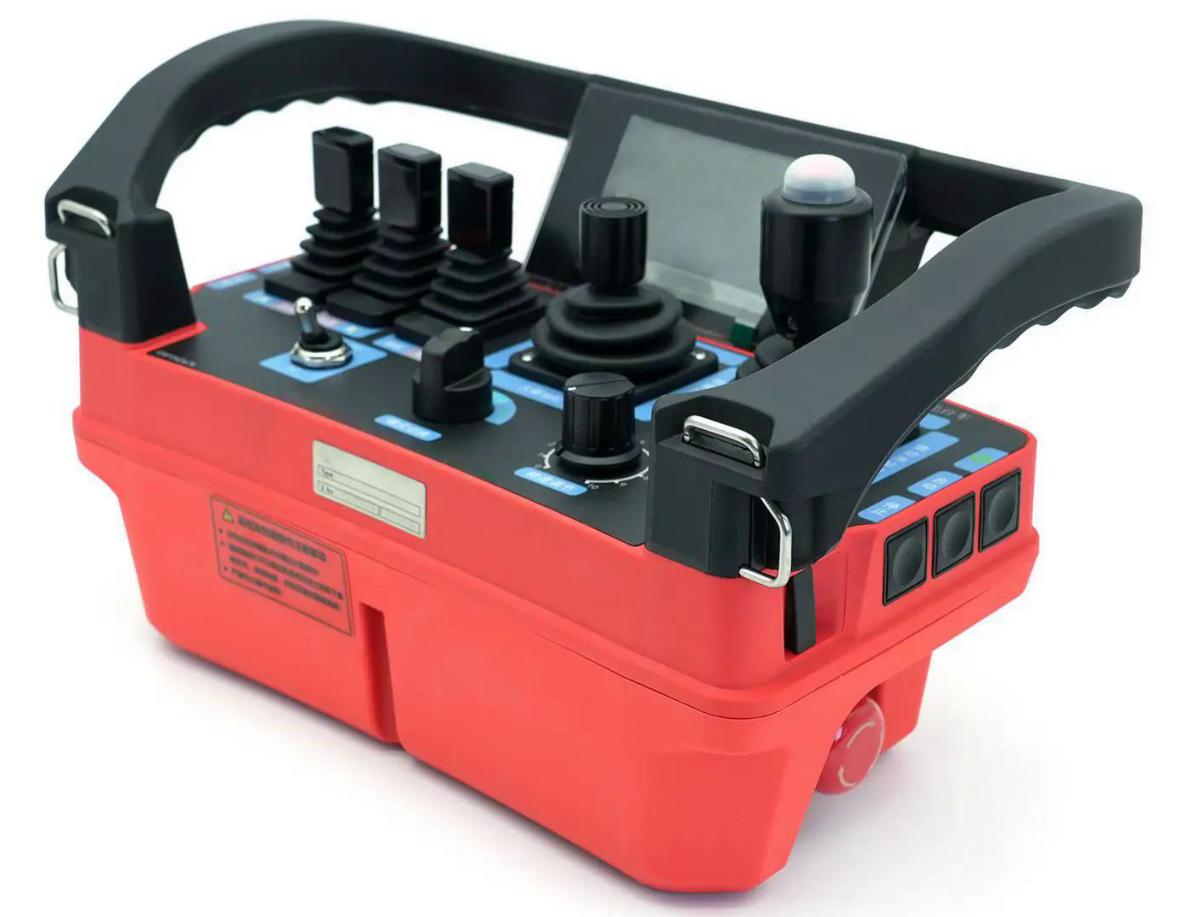
Modern handheld transmitters with proportional dual-axis joysticks allow operators to walk directly alongside the installation team. Workers can rest their hands naturally on the contoured housing while feathering hydraulic movements with fingertip precision. This continuous comfort eliminates fatigue-induced hand tremors, ensuring steady crane positioning and clean placement every time.
Advancements in Industrial Radio Remote Control System Architecture
Beyond physical ergonomics, the internal electronics of industrial wireless controls have advanced dramatically. Modern systems are no longer simple one-way radio transmitters that blindly send command signals to a machine. Instead, they operate as intelligent communication hubs that facilitate real-time, bidirectional data exchange between operator and machine.
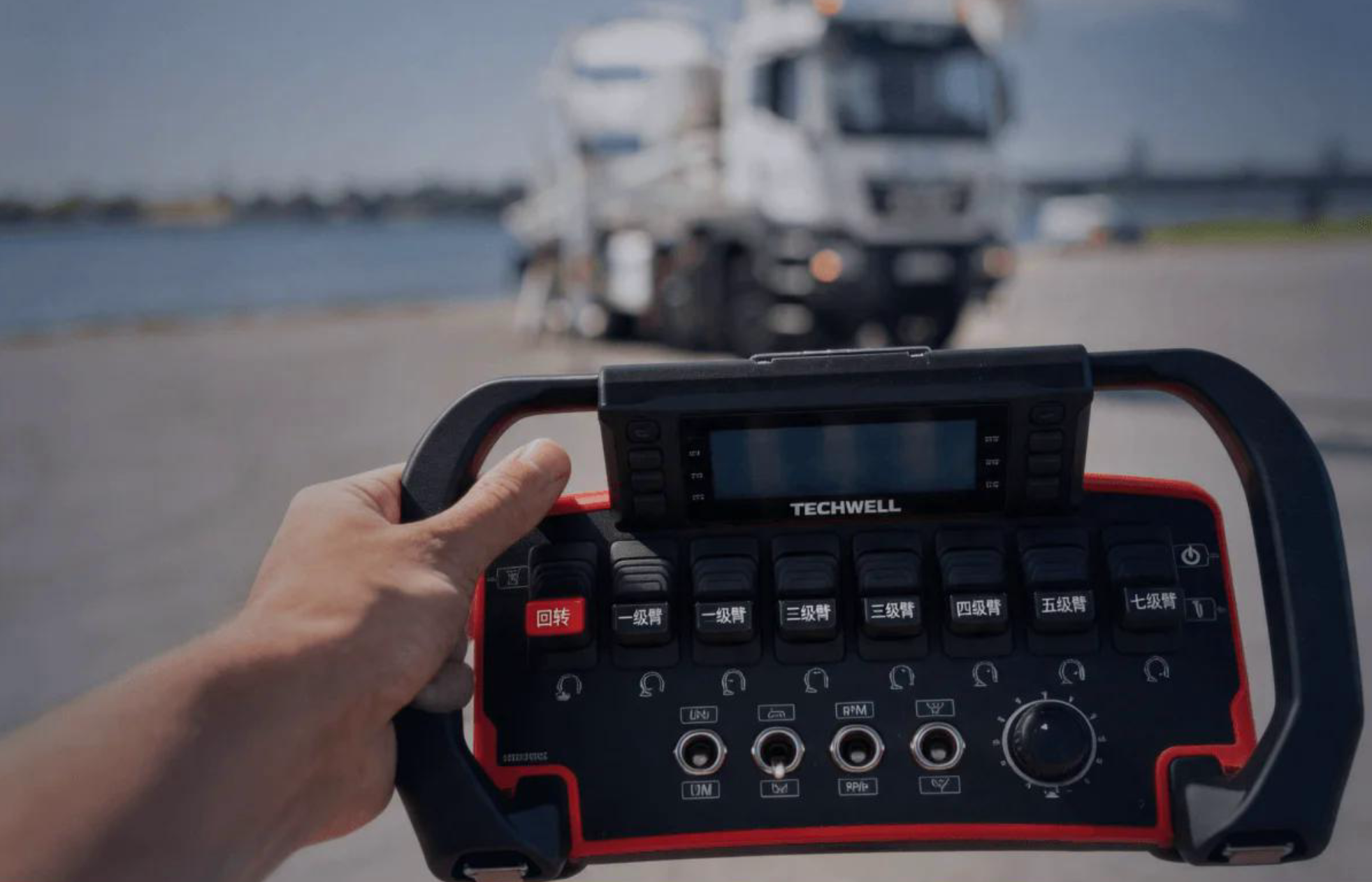
An advanced industrial radio remote control system now frequently incorporates graphical displays or high-brightness LED indicators. These screens provide real-time telemetry data directly on the handheld transmitter. Operators can instantly monitor engine diagnostics, live load weights, hydraulic pressure levels, and battery status without walking over to the central machine console.
To ensure uninterrupted signal clarity in congested factories, modern systems employ dynamic frequency-hopping technology. Transmitters continuously scan the local radio spectrum and switch channels automatically if ambient electromagnetic interference is detected. This seamless frequency agility maintains continuous control without causing signal drops or operational lag.
Scenario 2: Mobile Crushing and Aggregate Processing
Quarries and aggregate recycling facilities represent some of the most punishing operating environments in the world. Mobile rock crushers and vibrating screening plants generate violent mechanical vibration and thick clouds of abrasive mineral dust. Operators must manage conveyor speeds and feeder rates from varying distances to prevent hopper blockages.
Rugged wireless transmitters engineered for aggregate processing feature reinforced silicone bumpers and internal shock-dampening mounts. These structural protections isolate delicate internal circuit boards from severe drop impacts and continuous vibration. Operators can stand safely upwind from dust plumes while maintaining absolute mastery over sorting speeds and emergency shutdown triggers.
Ingress Protection and Mechanical Durability
Harsh operating conditions demand uncompromising physical protection standards. Premium wireless controllers are built with certified IP65 ingress protection ratings. This sealing ensures that internal electronic assemblies remain fully protected against torrential rain, coastal salt fog, high humidity, and airborne contaminants.
Enclosure materials are also specially formulated to resist degradation from ultraviolet radiation, hydraulic fluids, and corrosive industrial chemicals. This chemical resilience prevents housing embrittlement, ensuring that buttons, seals, and joysticks retain their mechanical integrity across years of intensive daily use.
Modularity and Tailored OEM Partnerships
Every category of heavy machinery features unique operational parameters and distinct hydraulic requirements. Standard off-the-shelf transmitters rarely provide the specialized switch layouts or custom communication protocols demanded by modern machine builders. Consequently, modularity and customization have become dominant trends across the industrial sector.
Original Equipment Manufacturers (OEMs) require tailored solutions that integrate directly into their proprietary control networks. Working with dedicated engineering teams provides machine builders with comprehensive OEM and ODM support. Equipment designers can customize button legends, configure multi-axis joystick curves, and implement specialized CAN-bus or serial communication protocols.
Integrating a customized Techwell Remote Control solution ensures complete mechanical and electrical harmony between the transmitter and the machinery. Tailored transmitter faceplates simplify training for end-users, while custom-engineered receivers streamline factory installation for the machine builder. This collaborative engineering approach creates a differentiated, high-value product in competitive global markets.
Future-Proofing Industrial Control Solutions
The trends shaping industrial wireless control systems reflect a broader industrial shift toward safer, smarter, and more ergonomic workflows. By prioritizing operator comfort, bidirectional telemetry, and rugged physical durability, modern wireless solutions empower enterprises to achieve peak operational efficiency.
Investing in purpose-built wireless hardware protects your workforce from hazardous environments and reduces machine maintenance costs. As heavy machinery becomes more sophisticated, deploying cutting-edge wireless technology ensures your industrial operations remain productive, adaptable, and fully prepared for the future.