Heavy industrial machinery has advanced rapidly over the past few decades. Modern hydraulic systems and multi-axis actuators provide unprecedented mechanical power. However, the true productivity of any heavy machine depends directly on human control. Bridging the gap between operator intent and mechanical execution requires a highly intuitive communication interface.
Traditional setups tethered the operator to a stationary cab or a cumbersome wired pendant. These rigid interfaces forced workers into fixed angles. They often created dangerous blind spots and limited overall situational awareness. In fast-paced industrial environments, restricted mobility directly hampers productivity and introduces serious workplace safety hazards.
The Shift to Untethered Operations
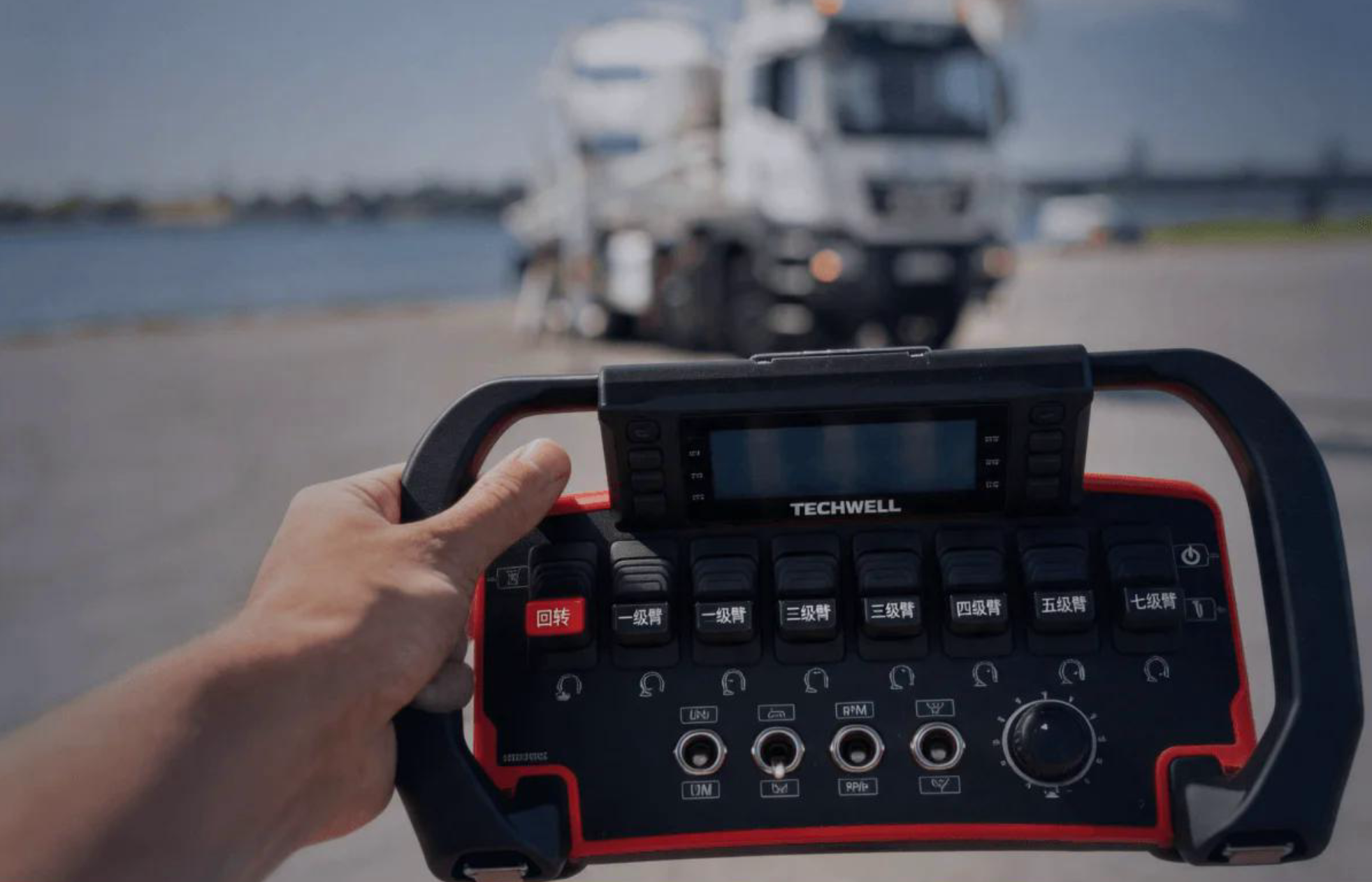
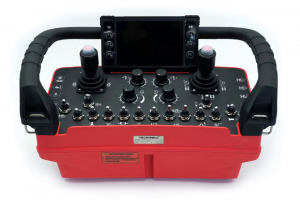
Modern wireless interfaces fundamentally change this dynamic across diverse heavy sectors. By converting physical hand inputs into secure radio signals, wireless technology allows operators to position themselves optimally. Working with an experienced industrial remote control manufacturer ensures these control interfaces integrate seamlessly with complex industrial electrical architectures.
By removing physical limitations, workers can choose the safest vantage point for any given maneuver. They direct line of sight can reduce reliance on secondary spotters for certain maneuvers, improving operational speed and reducing the chances of costly miscommunication between floor personnel. This direct line of sight improves operational speed and reduces the chances of costly miscommunication between floor personnel.
Scenario 1: Precision Metallurgy and Smelting
High-temperature metallurgy environments present intense physical challenges for personnel. In busy foundry operations, ladle transfer cars and overhead cranes handle thousands of pounds of molten metal. High ambient heat, splashing slag, and toxic fumes make working directly next to the active machinery extremely hazardous for any human worker.
Fixed-cab operators often struggle to see inside casting molds properly. A wireless handheld transmitter solves this visibility challenge completely. The operator can stand safely at an elevated mezzanine while maintaining continuous visual contact with the active pour spout. This spatial separation dramatically enhances daily workplace safety and comfort.
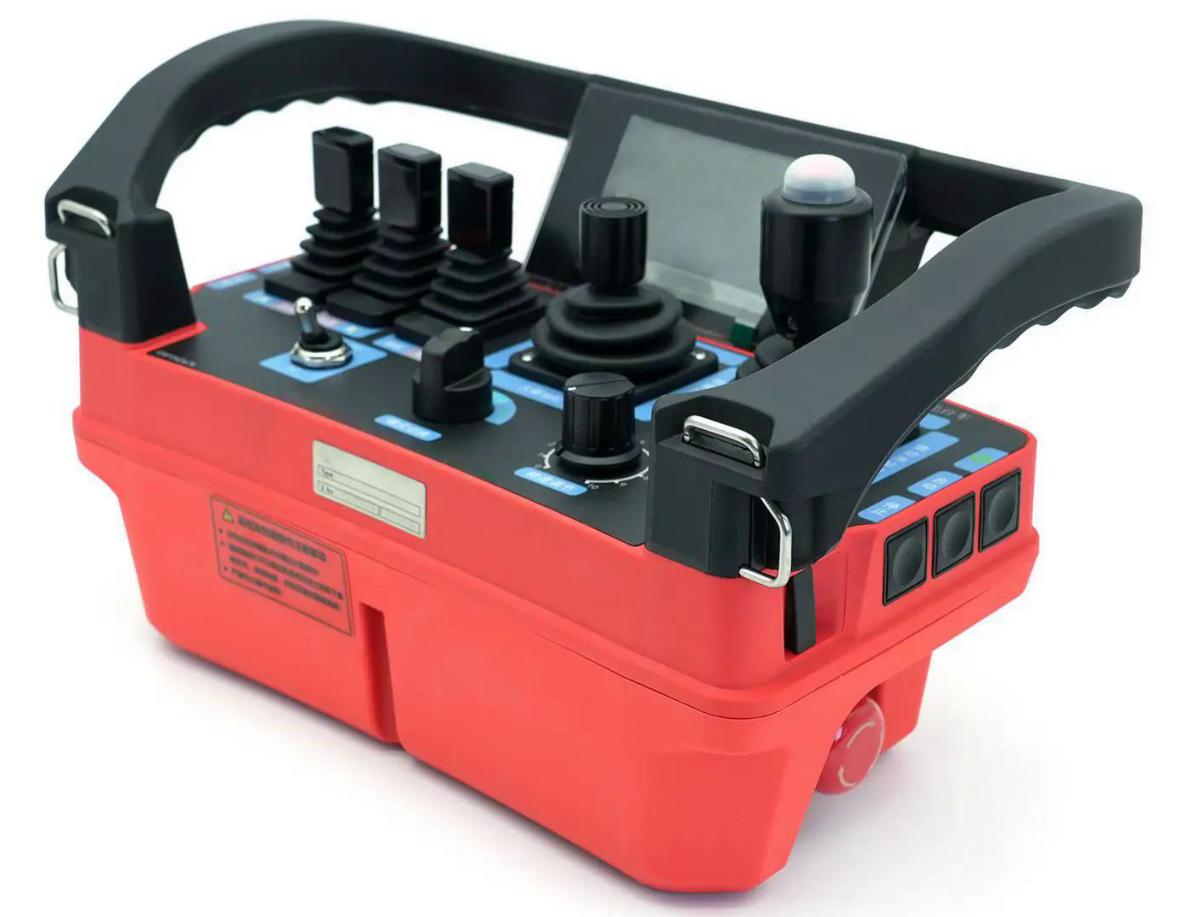
Through smooth proportional joysticks, the worker regulates hydraulic tilt angles with millimeter accuracy. This precise control prevents catastrophic liquid metal spillage and protects valuable casting equipment. By decoupling the operator’s location from the machinery, foundries significantly accelerate production cycle times while maintaining strict safety compliance.
Architecture of an Industrial Radio Remote Control System
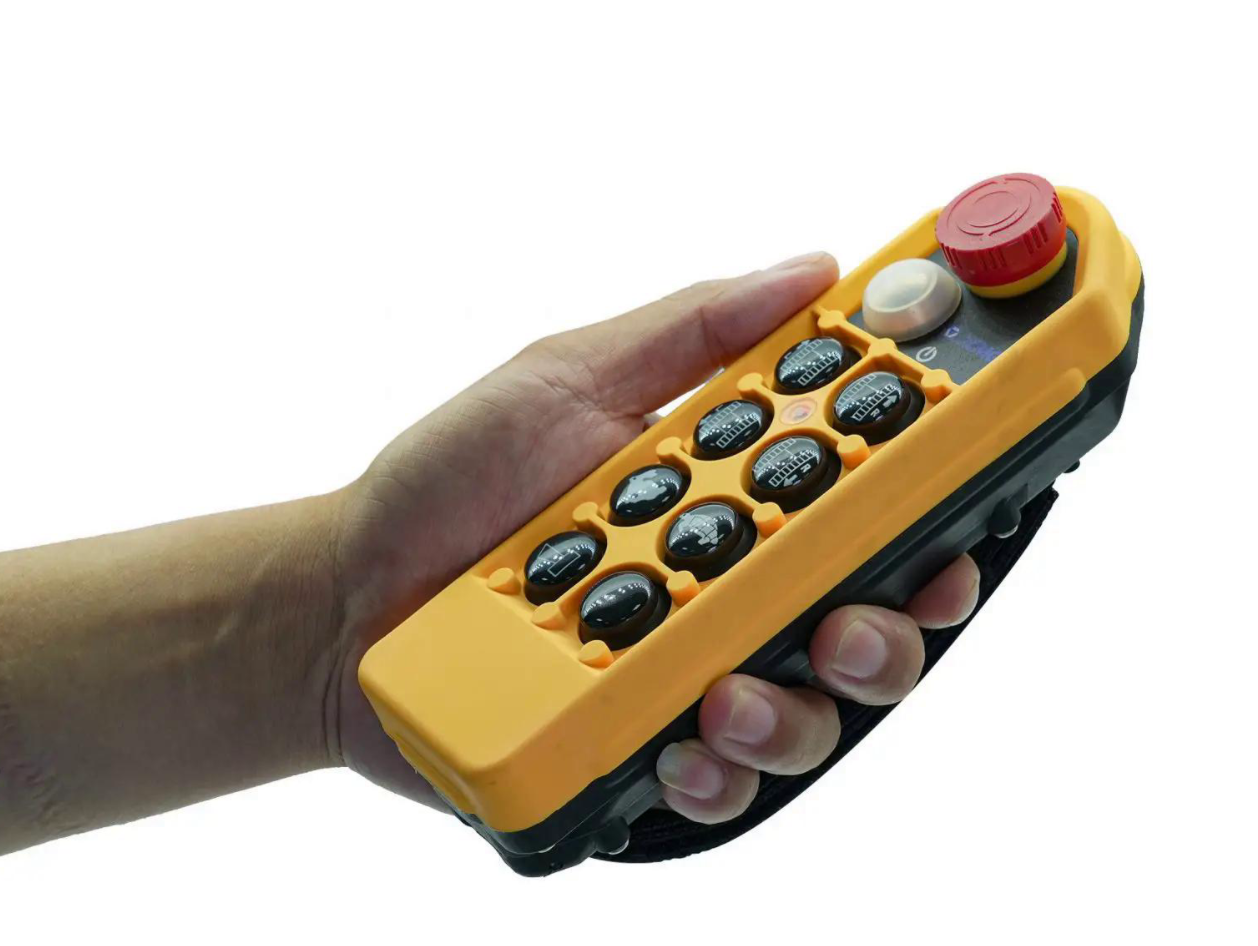
Connecting human operators to complex machinery requires sophisticated signal transmission architecture. An advanced industrial radio remote control system consists of two primary hardware components. These are a rugged handheld transmitter and a machine-mounted receiver unit. Both are designed to maintain stable and reliable communication in harsh, unpredictable environments, supporting consistent operational performance.
When an operator engages a joystick or switch, internal microprocessors encode the mechanical action. They turn it into high-speed digital data packets immediately. These packets are transmitted across dedicated radio frequency bands using multi-bit digital addressing.
Upon receiving the transmission, the receiver unit decodes the data packets swiftly. It converts them into discrete electrical outputs that interface directly with the machine’s programmable logic controllers.
Scenario 2: Forestry and Heavy Material Handling
Forestry and timber processing machinery operates across uneven terrain and unstable forest floors. Timber harvesters, forwarders, and log loaders perform rigorous multi-stage operations daily. These tasks include grasping, delimbing, cutting, and sorting heavy logs. Managing these complex hydraulic functions requires rapid, multi-axis coordination from a skilled operator.
When operators manage timber handling from a mobile transmitter, they gain immense flexibility. They can walk around the active cutting zone to inspect log quality closely. They can observe potential bounce-back trajectories that would remain completely invisible from inside a standard, enclosed tractor cab.
Furthermore, operators can easily switch between coarse positioning movements and micro-metering hydraulic adjustments. This on-the-fly flexibility prevents mechanical shock loading on sensitive boom cylinders. Reducing this hydraulic component wear minimizes unexpected field breakdowns, which is especially critical in remote harvesting locations far from repair facilities.
Technical Resilience and Safety Specifications
Industrial worksites subject electronic hardware to severe mechanical vibration, moisture, and abrasive dust. Standard commercial-grade electronic devices quickly degrade and fail under these brutal conditions. Purpose-built industrial hardware incorporates robust engineering standards to guarantee long-term operational reliability, even in the harshest global environments.
Transmitters and receivers feature high-grade enclosures with certified IP65 protection ratings. This critical sealing prevents internal damage from torrential rain, fine mineral dust, and corrosive chemicals. Additionally, internal shock-absorbing mounts protect sensitive printed circuit boards from continuous machine vibration and accidental drops onto hard concrete surfaces.
Functional safety is an equally critical specification for heavy machinery interfaces. Advanced controllers feature integrated emergency stop pushbuttons and redundant dual-microprocessor safety circuits. If the radio signal drops or a fault occurs, the receiver immediately halts all dangerous machine motions within milliseconds to protect nearby personnel.
Custom OEM Engineering for Machine Builders
Every heavy machinery category demands distinct ergonomic layouts and electrical interfaces. Off-the-shelf remote controls rarely accommodate the proprietary control protocols required by original equipment manufacturers. Tailored hardware partnerships are essential for successful machine integration.
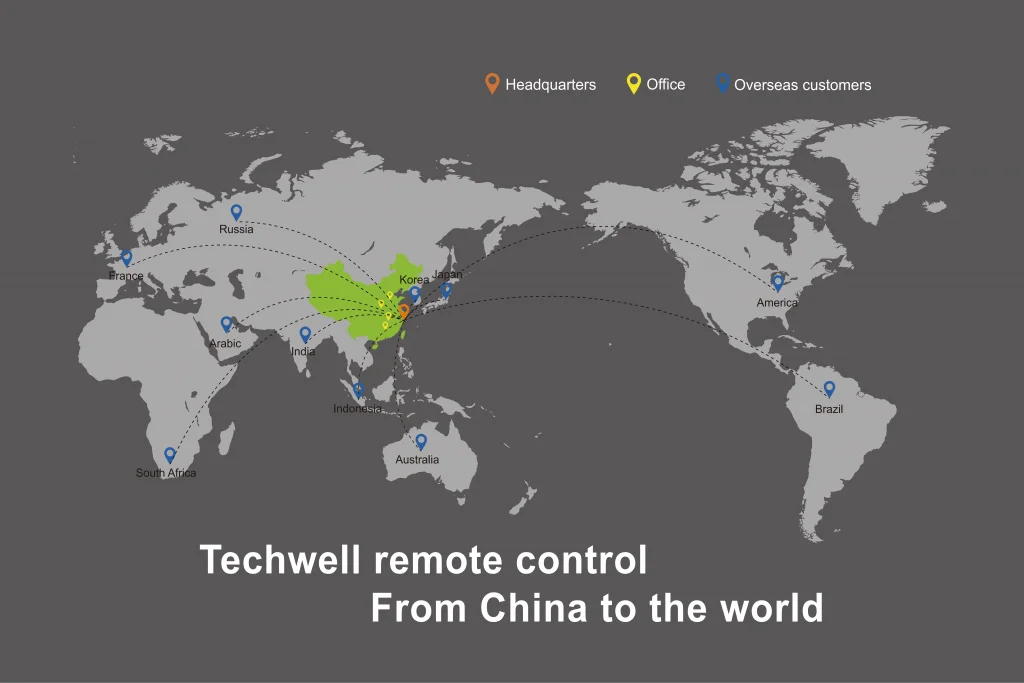
Collaborating with specialized engineers provides B2B clients with comprehensive OEM and ODM support. Technical teams work closely with machine designers to customize transmitter faceplates and communication protocols. This collaborative approach guarantees that the resulting Techwell Remote Control solution matches the heavy machine’s exact operational and safety requirements.
Customized engineering allows machinery builders to offer turnkey, market-ready equipment globally. By delivering intuitive operator ergonomics and reliable wireless performance, heavy machinery manufacturers enhance their brand reputation. They provide superior long-term user value, ensuring their heavy equipment stands out in a highly competitive industrial market.
Driving Industrial Productivity
Modern wireless control technology completely redefines how operators interact with heavy industrial equipment. By removing restrictive physical cables, wireless systems provide workers with the mobility needed to execute complex tasks safely. Upgrading your machinery optimizes daily productivity, reduces workplace injuries, and protects high-value capital assets across challenging global industries.