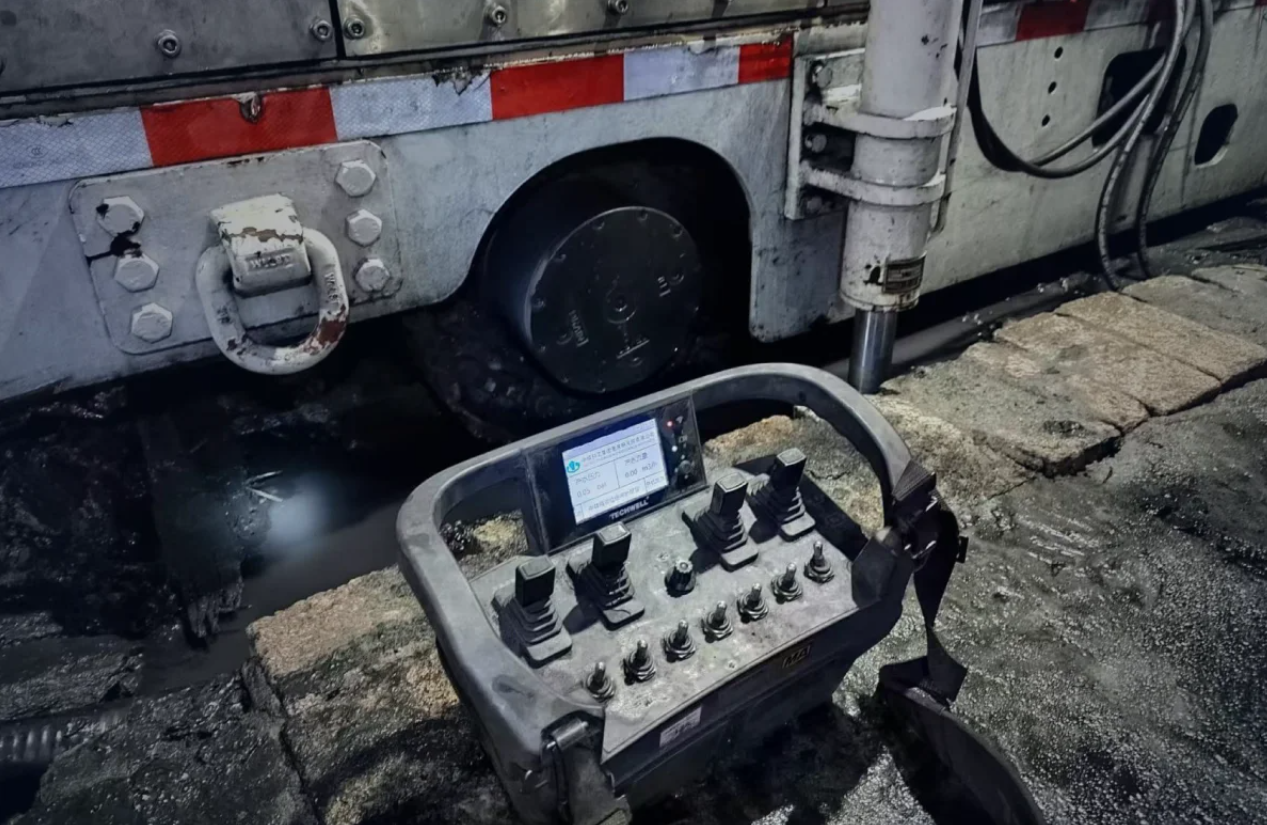
Construction-site lifting often involves moving materials between loading areas, storage points, and designated landing zones. Operators must coordinate equipment movements while dealing with temporary structures, changing site layouts, and nearby personnel. Fixed control stations may limit where operators can stand during these tasks.
Handheld wireless control offers another operating method for suitable crane and hoist applications. However, selecting a transmitter requires more than checking its dimensions or communication range. The control layout, receiver interface, and site conditions must support the actual lifting process.
Which Lifting Tasks Fit Simple Button Control?
Consider a crane moving bundled steel sections from a receiving area to a designated landing point. Depending on the crane design, the operator may need separate commands for hoisting, lowering, trolley travel, and bridge travel. These movements should be identified before selecting the transmitter.
Some lifting tasks require frequent positioning adjustments or several movement groups. Eight buttons do not automatically provide enough inputs for every crane configuration. Engineers should review the machine’s operating sequence, speed requirements, and existing control circuit before deciding whether single-speed buttons are appropriate.
When comparing handheld industrial remote controls, buyers should distinguish basic movement commands from functions requiring proportional speed control or additional operating modes. These capabilities depend on the selected transmitter, receiver, and machine control system.
Button Layout Must Follow the Crane’s Movement Logic
Button positions should correspond to clearly defined machine actions. For example, lifting and lowering commands can be assigned to separate controls, while travel functions follow the crane’s movement directions. Clear labels and consistent placement help operators identify commands during repeated tasks.
Single-speed, self-resetting pushbuttons provide discrete input commands. They do not automatically provide proportional speed regulation or demonstrate an emergency-stop function. The receiver and machine controller must process commands according to the specified operating logic and required safety conditions.
Operators can also assess button reach, label readability, and handling comfort while wearing normal work gloves. These practical checks are useful when evaluating industrial wireless controls, but ergonomic convenience does not replace verification of electrical compatibility or machine safety functions.
Where Should Radio Coverage Be Checked?
Wireless distance specifications describe communication performance under particular conditions. They do not determine where an operator is permitted to stand. Approved operating positions must consider the lifting area, restricted zones, site obstacles, and the required communication arrangements.
Metal structures, construction materials, moving equipment, and nearby radio sources may affect signal reception. Testing should therefore cover the intended operating positions using the actual transmitter-receiver combination and antenna installation.
During commissioning, qualified personnel should verify control response under controlled conditions. Test results should identify locations where reception is unreliable. If unexpected command behavior occurs during operation, the affected movement should stop according to site procedures rather than attempting repeated commands with a suspended load.
How Does the BES08 Fit Crane and Hoist Applications?
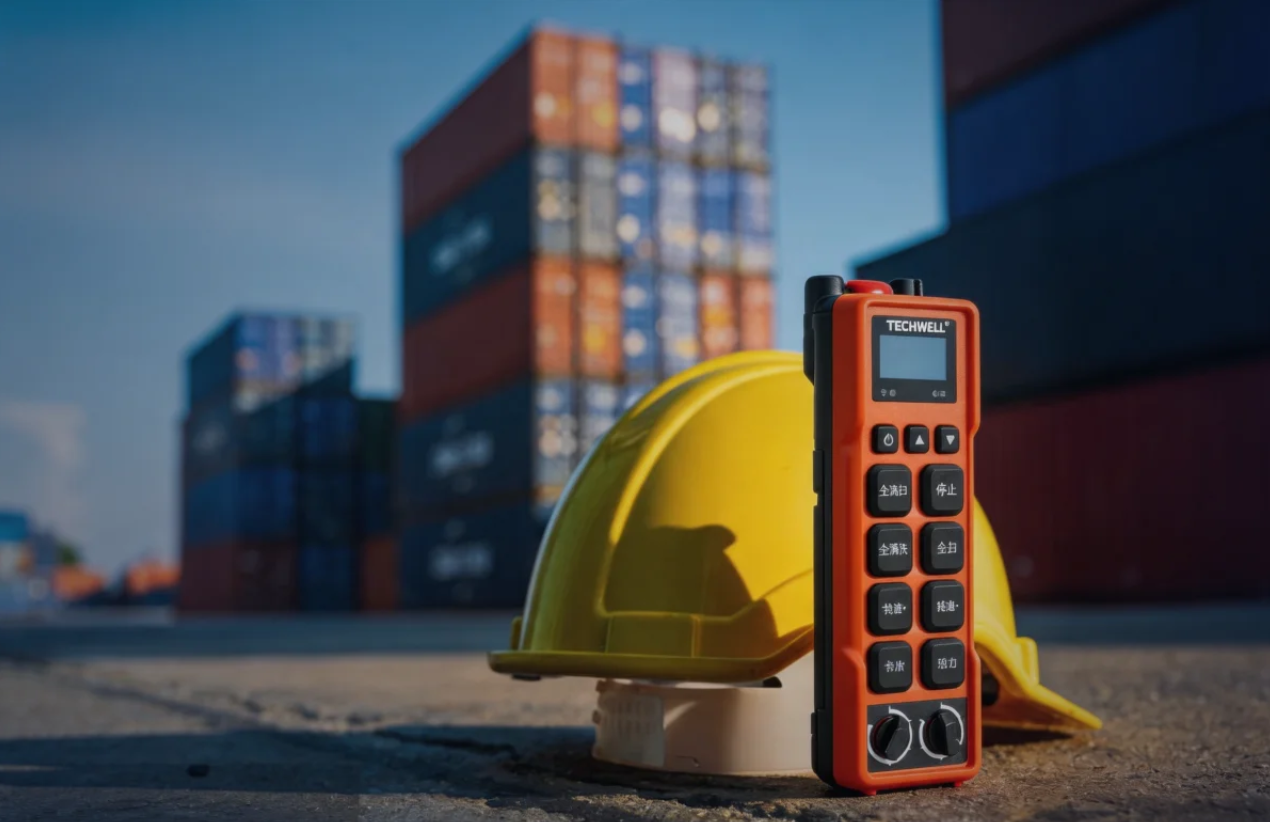
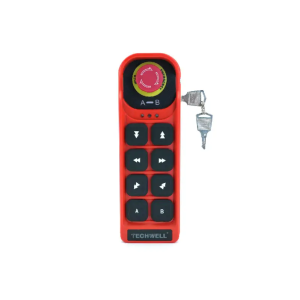
The BES08 transmitter uses eight single-speed pushbuttons, all of which are self-resetting. Its compact housing measures 190 × 63 × 45 mm and weighs approximately 0.2 kg. This design supports handheld, one-handed operation for suitable crane and hoist control tasks.
The transmitter uses two standard AA batteries and has a specified operating temperature range of -25°C to 70°C. Its rated wireless communication range is at least 150 m under specified test conditions with a compatible receiver. Actual coverage depends on installation conditions, obstacles, and radio interference, so the operating range must be verified on site.
Techwell Remote Control provides this model for straightforward crane and hoist applications. The BES08 is not an explosion-proof transmitter and should not be selected for mining machinery or hazardous-area operations. Its enclosure protection rating, receiver compatibility, and required safety functions must be checked against the documentation for the supplied configuration.
What Must Be Verified Before Commissioning?
Before installation, equipment manufacturers should prepare the crane model, electrical drawings, command assignments, and required receiver outputs. These documents allow engineers to check whether each transmitter button corresponds to the intended machine movement.
Receiver selection must also consider output type, electrical ratings, and machine interlocks. Relay outputs should match the relevant control circuit, while communication-loss behavior and restart conditions must be defined within the complete machine control system.
Qualified technicians should verify the control functions and relevant safety responses according to the manufacturer’s instructions. Dust and water protection do not establish explosion-proof suitability. Buyers comparing industrial wireless controls must distinguish ordinary crane applications from equipment requiring separate hazardous-area approval.
Request a Crane Control Configuration Review
The suitability of handheld industrial remote controls depends on the lifting task, required command functions, and compatibility with the machine’s electrical system. Compact dimensions and a published communication range cannot replace these checks.
For a configuration review, customers can provide their crane or hoist type, required control actions, receiver signal output method, and operating conditions. Equipment photos and electrical drawings can further clarify the required connections.
Contact Techwell Remote Control to request the BES08 product documentation and discuss a compatible transmitter-receiver configuration before placing an order.