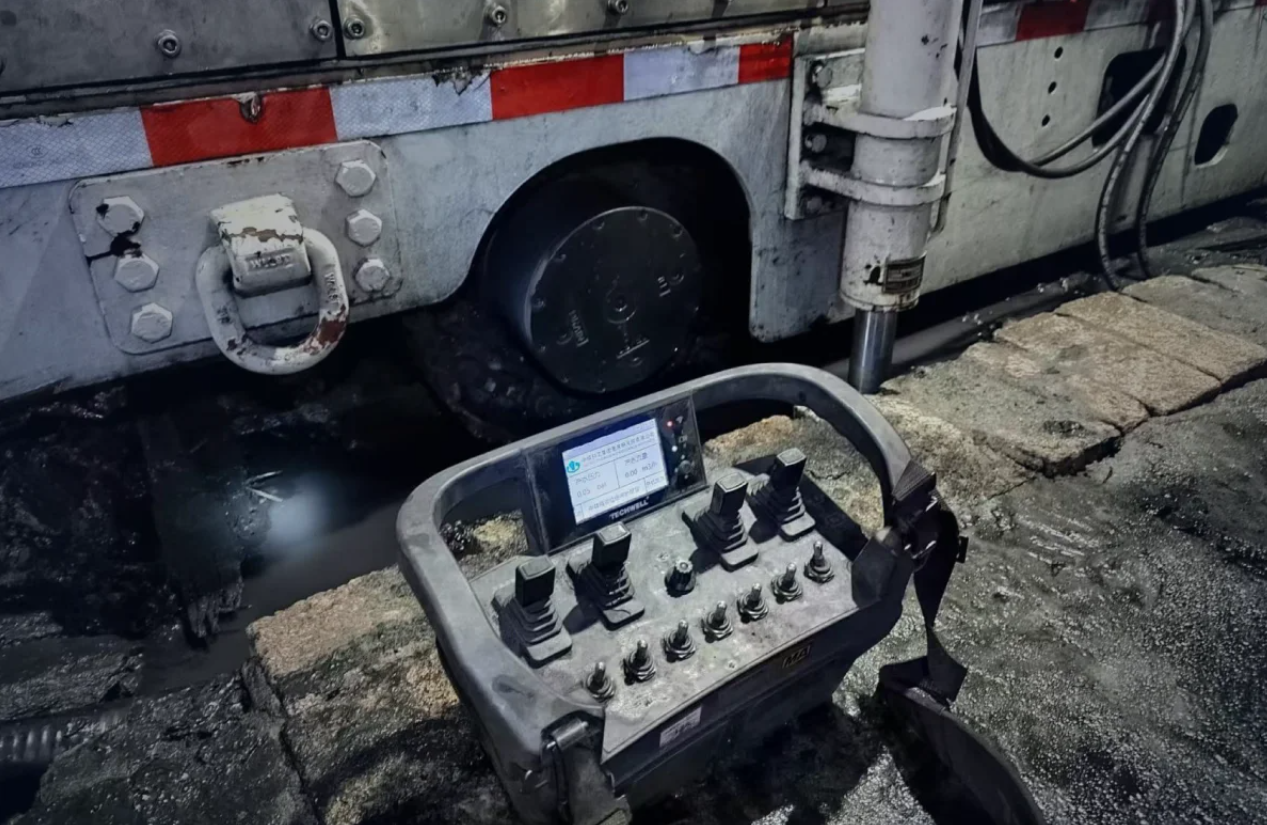
Suppose a lifting machine responds normally during initial testing, but several wireless commands fail to activate the expected movements after installation. The transmitter appears to be operating, yet some functions respond while others remain inactive. This hypothetical scenario illustrates how control problems can emerge even when the transmitter seems to be working.
Such problems may involve the receiver, output configuration, communication conditions, or machine control logic. For machinery manufacturers and maintenance teams, troubleshooting should begin with identifying the symptoms and checking visible status information. More detailed inspections, configuration changes, and safety-related testing should be handled by qualified technicians following the equipment manuals.
Why Wireless Commands May Not Reach the Machine
When an operator presses a button or moves a joystick, the transmitter converts that action into a wireless command. The receiver identifies the signal and then provides the corresponding output to the machine control system.
Failures can occur at different points in this process. Wireless communication may be affected by interference in the surrounding environment. Receiver outputs may also fail to match the control logic required by the machine.
For manufacturers using industrial remote control receivers, checking only whether the receiver can receive a signal is therefore not enough. The output type, interface arrangement, and machine-side control requirements also need to match.
Where Communication Problems Usually Begin
Industrial workplaces often contain metal structures, motors, electrical equipment, and other wireless devices. These conditions may influence radio communication between the transmitter and receiver.
Another issue comes from configuration differences. The transmitter may provide the correct operating command, but the receiver output still needs to correspond with the machine function. If the output arrangement does not match the equipment design, the command may not produce the expected response.
This is why a radio remote control transmitter receiver system should be evaluated as one control chain. Signal transmission, receiver processing, output configuration, and machine response are connected rather than independent steps.
How Manufacturers Can Build a More Suitable Control Link
The first step is to define the machine functions that require wireless control. Manufacturers can identify which movements use simple switching commands and which functions need different control methods.
The next step is to review the working environment. Equipment used on construction sites, in factories, or around large metal structures may require greater attention to communication stability and interference.
Receiver selection should then focus on output requirements and machine interfaces. Installation space, control logic, maintenance access, and operating conditions should also be reviewed before production begins.
Through this process, manufacturers can reduce situations where the transmitter and receiver function normally on their own but do not integrate properly with the final machine.
How MMP00 Fits Basic Switching Applications
Consider a machine that only needs several basic on/off control functions. In this type of project, the manufacturer may not require a complex receiver with multiple advanced output methods. The priority is a straightforward wireless connection that can translate remote commands into relay switching outputs.
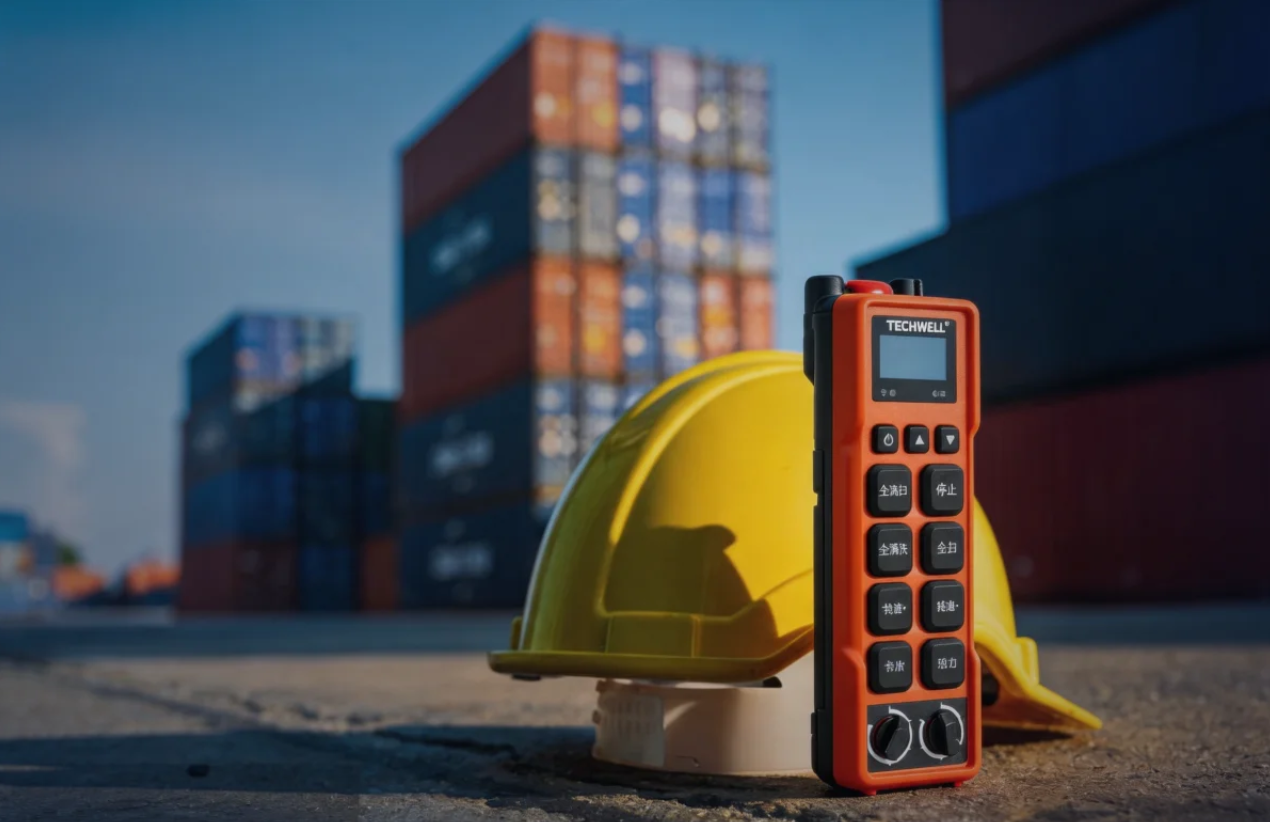
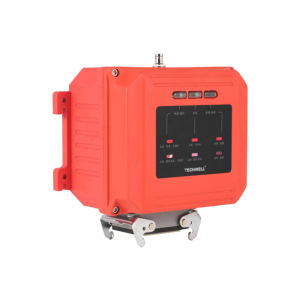
Techwell MMP00 receiver is designed for basic industrial applications. It operates on UHF radio frequency with frequency hopping technology. In the event of signal loss, the system will trigger emergency stop for fail-safe protection.
The receiver uses relay digital On/Off outputs for basic switching functions, such as start, stop, or direction commands, depending on the machine’s control logic. Before integration, buyers should confirm which function assignments can be configured and which settings are factory-defined. The relay contact ratings, supported transmitter models, and any permitted adjustments should also be checked against the specific product documentation. Wiring and functional testing are still required before operation.
When selecting industrial remote control receivers for similar machinery, manufacturers should still confirm that these relay outputs match the actual machine control logic. The receiver specification should be reviewed together with installation conditions and equipment functions rather than considered separately.
What Documents Are Needed Before Commissioning?
Before commissioning a radio remote control transmitter receiver configuration, manufacturers should obtain a function mapping table showing how each transmitter command corresponds to a receiver output and machine action. Electrical wiring diagrams, I/O assignments, communication requirements, and interlock conditions should also be documented. These materials help qualified technicians check connections, identify configuration mismatches, and verify control functions against the machine’s actual requirements. Techwell Remote Control works with OEM and ODM partners to review these technical details before system integration.
Solving the Problem as a Complete System
Returning to the opening scenario, a machine that fails to respond correctly does not necessarily have a defective transmitter. Operators should stop the affected operation, identify which commands fail, and record available power, communication, or fault indicators. These observations can help distinguish complete signal loss from partial control failures.
Qualified technicians should then compare the symptoms with pairing records, function mapping tables, I/O assignments, and electrical drawings. If commands are received but movements remain inactive, machine operating conditions and interlocks also need verification. Intermittent failures may require further investigation of radio coverage and interference.
Before inspection or repair, qualified personnel must isolate hazardous energy according to the manufacturer’s procedures. Troubleshooting should not involve bypassing interlocks or emergency-stop functions, or testing faults with suspended loads. These checks help identify potential causes while maintaining appropriate safety boundaries.