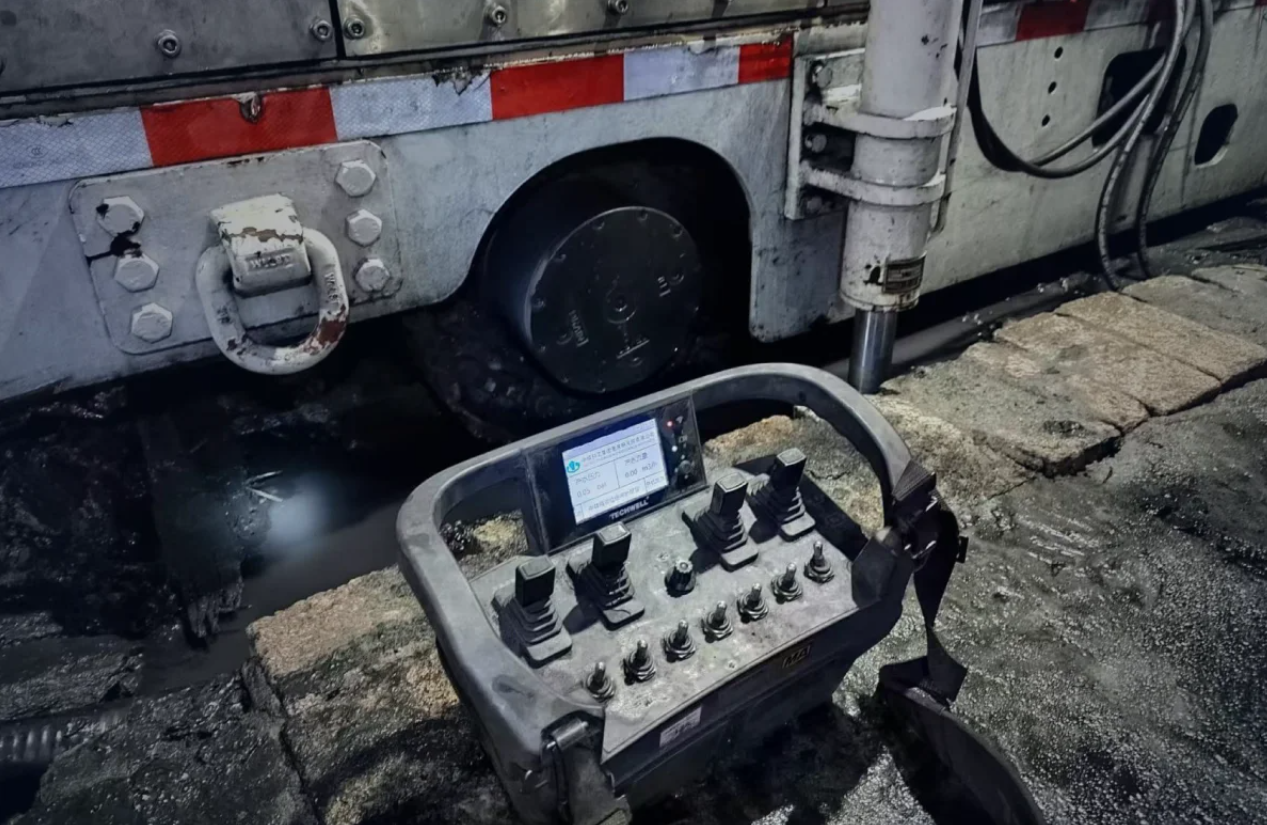
Heavy equipment often operates in challenging environments where operators need accurate control, stable communication, and flexible working methods. Construction sites, ports, mining areas, and industrial facilities usually involve large spaces, complex layouts, and continuous equipment movement.
Traditional wired control methods can limit operator positions and create additional management tasks. Wireless technology provides another option by allowing equipment control from a more suitable location. Understanding how industrial wireless control systems work helps businesses evaluate whether this technology matches their equipment requirements and application conditions.
Understanding the Role of Wireless Control in Heavy Equipment
Heavy equipment requires precise operation because small control differences can affect workflow and productivity. Cranes, lifting machines, and industrial vehicles often work in areas where operators need a clear view of the equipment and surrounding environment.
Wireless control solutions replace physical cable connections with remote communication methods. This structure gives operators more freedom to adjust their working positions while maintaining control over machine functions.
For equipment manufacturers and industrial users, industrial wireless control systems provide a flexible approach for different applications. Signal stability, communication distance, and compatibility with machine structures are important factors when reviewing a control solution.
The development of wireless technology also changes how operators interact with equipment. Instead of staying near fixed control panels, workers can move to locations that provide better visibility and support safer operation processes.
Different industries have different requirements for remote control systems. Construction equipment may focus on movement flexibility, while port and mining equipment may require stronger environmental protection. Understanding these differences helps businesses select suitable configurations.
Safety and Reliability in Industrial Control Applications
Safety is an important consideration for heavy equipment operation. A control system needs to process commands accurately and maintain stable communication during daily use. System design, signal management, and protective features all influence operation performance.
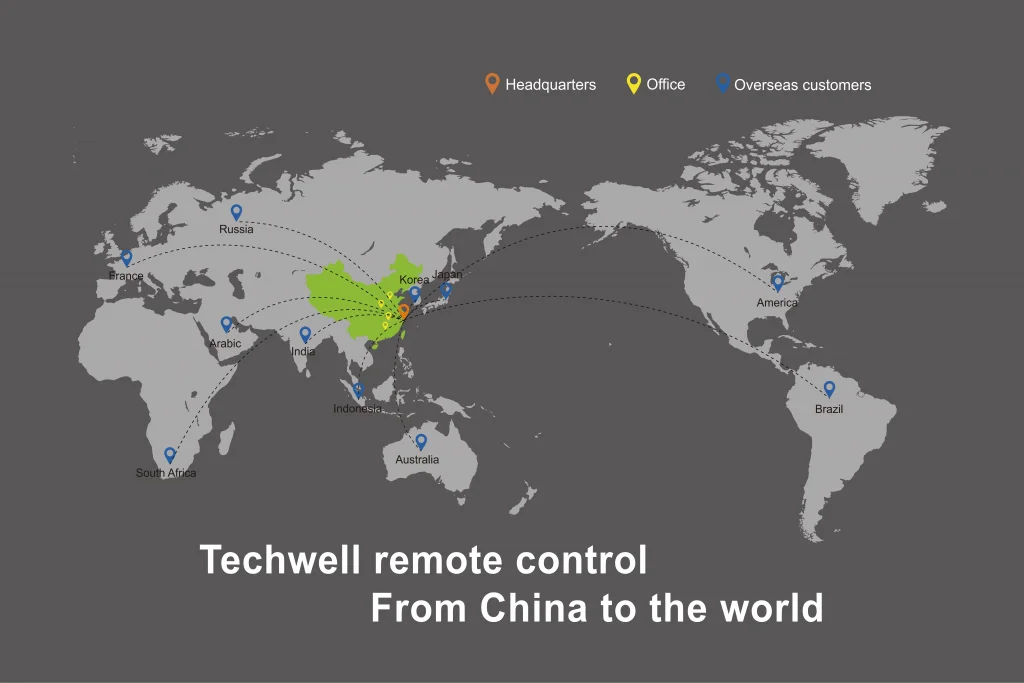
We have focused on industrial wireless remote control systems and communication technology since 2005. Techwell Remote Control provides solutions for construction, ports, mining, metallurgy, and other industrial fields, with more than 1,000 custom projects completed across over 40 countries.
Our product development focuses on four principles: Safety, Reliability, Convenience, and Intelligence. Certain product configurations may incorporate Dual-CPU monitoring technology, but this design alone does not establish a functional safety performance level. Where PL d is claimed, buyers should verify the applicable standard, such as ISO 13849-1, and obtain documentation identifying the assessed safety functions, covered transmitter and receiver models, and approved hardware and software versions. The stated performance level must not be extended to other products or the complete machine without separate verification.
How Wireless Technology Improves Operator Convenience
Long working hours and repeated equipment movements may influence operator comfort and efficiency. Wired controllers can restrict movement and require additional cable management during operation. Wireless solutions help reduce these limitations by providing more flexible control methods.
The convenience of industrial wireless control systems comes from reducing dependence on physical connections. Operators can select suitable positions according to equipment visibility and working conditions without managing cables around the operation area.
Wireless control is especially useful in large working spaces. When machines operate across wider areas, operators can maintain a better view of equipment movement and adjust their position based on actual site requirements.
For equipment manufacturers, integrating wireless control can also simplify machine design. Reducing cable connections may create more flexible installation options and support different equipment layouts.
Before applying wireless technology, businesses should review machine type, operating environment, and control requirements. A practical evaluation process helps identify suitable functions for specific projects.
How Intelligent Functions Support Equipment Management
Modern industrial equipment is developing toward more connected and flexible operation methods. Control systems are no longer limited to basic commands but can include functions that support more organized equipment management.
In supported configurations, one transmitter may be used to select and control multiple cranes individually. This arrangement requires clear control authority, positive identification of the selected crane, and interlocks to prevent unintended commands to other machines. Before switching between cranes, operators should stop the current movement and confirm the new selection. Control handover procedures and each crane’s response to communication loss must also be verified during commissioning.
Selective control should not be confused with synchronized tandem lifting. Operating multiple cranes together requires additional coordination of movements, load distribution, and safety functions. Such operations need a separately engineered control arrangement, documented risk assessment, and machine-level validation. Support for multiple receivers alone does not establish safe coordinated lifting capability.
As an industrial wireless controller manufacturer, we combine communication technology with practical project experience. Our solutions consider four key areas: safety, reliability, convenience, and intelligence.
Intelligent functions can also support future equipment upgrades. Businesses can review current operation methods and possible development needs before deciding how control technology should be integrated into their machines.
The application of intelligent wireless control depends on equipment structure and project conditions. Different machines may require different control layouts, communication settings, and functional designs.
How to Narrow Down the Control System Options
Start by documenting the machine type, existing control arrangement, and required movements. Crane and hoist projects should identify lifting, trolley, and bridge travel functions, along with single-speed, two-speed, or variable-frequency operation. Buyers should prepare the electrical drawings, control voltage, and current pendant button assignments before discussing a wireless retrofit.
Next, examine the machine interface rather than selecting a transmitter by appearance alone. The industrial remote control receiver options include models with relay outputs and configurations supporting other industrial control interfaces. Engineers need to verify output types, signal ratings, communication protocols, transmitter compatibility, and connections to existing safety circuits.
Hazardous locations require a separate assessment. The explosion-proof control range provides a starting point for reviewing available models, but selection must follow the actual gas, dust, or mining classification. Buyers should request valid certificates covering the proposed model, approved accessories, and installation conditions. Receiver placement must also be checked independently.
Which Control Layout Fits the Operator’s Tasks?
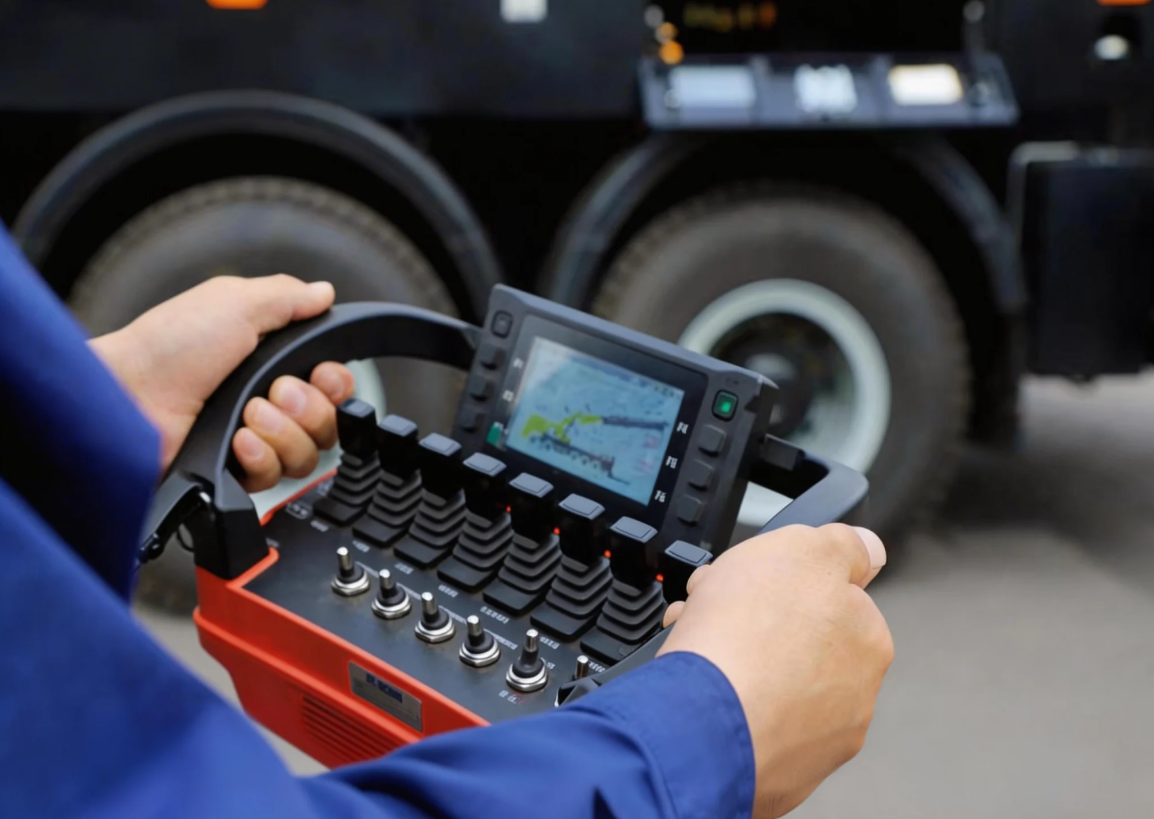
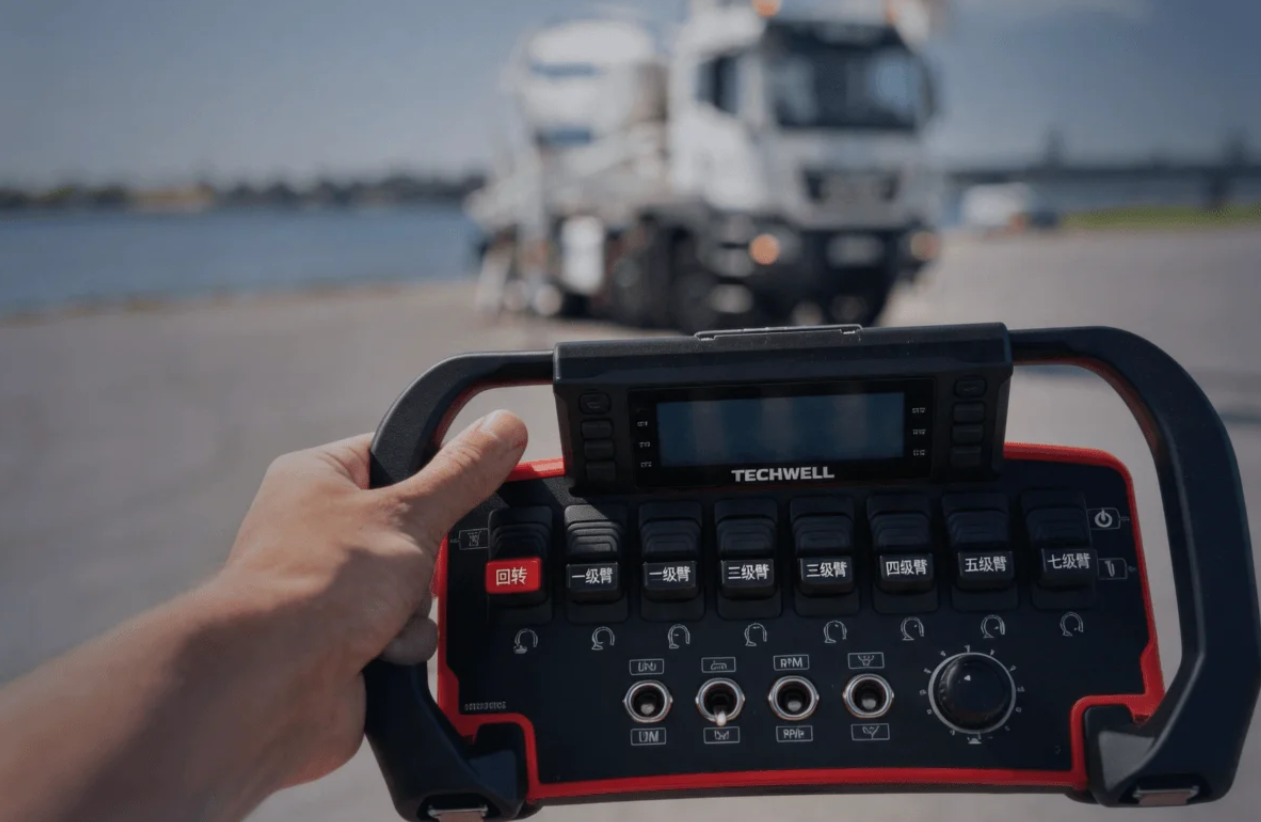
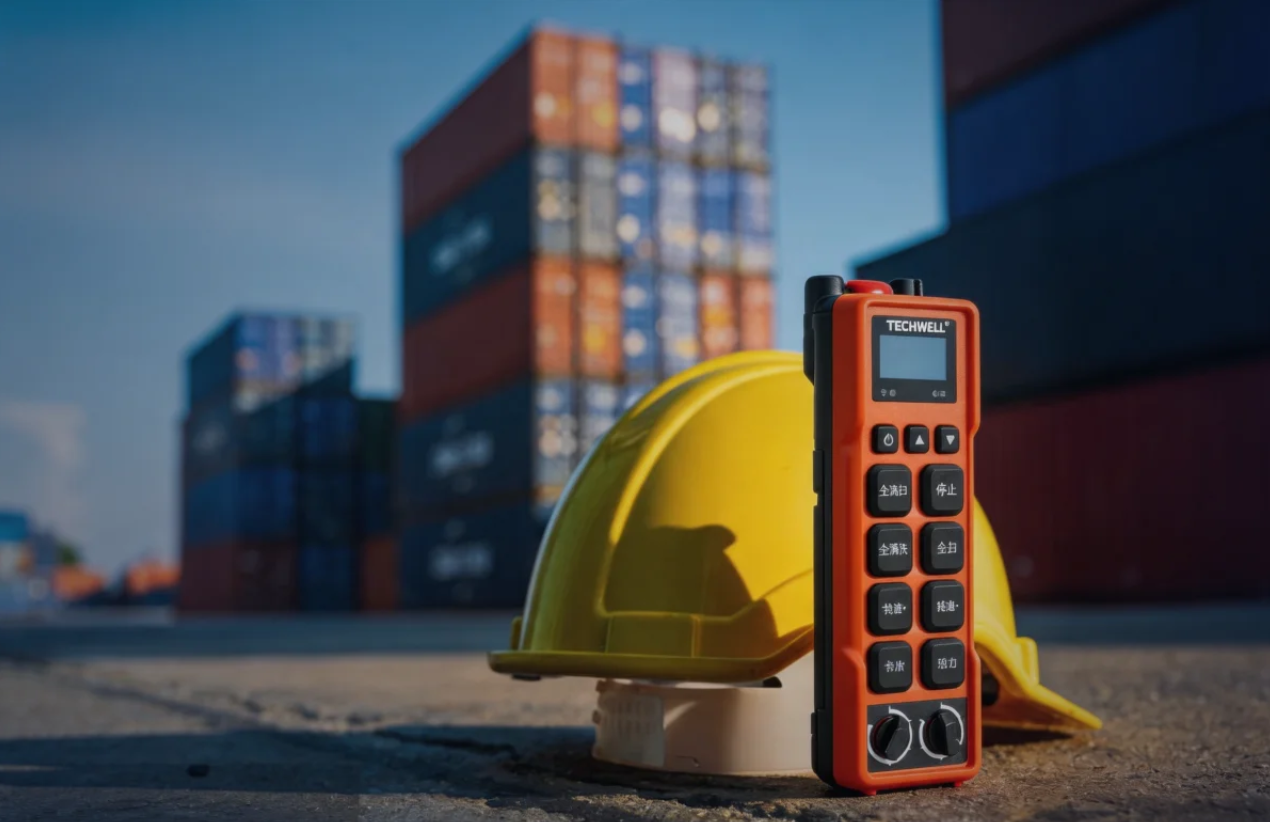
Control complexity and operator ergonomics should guide the transmitter choice. Compact push-button remote controls may suit equipment with a limited number of discrete movements. More complex machinery may require joystick remote controls, subject to the machine’s supported control functions.
For handheld and shoulder-supported arrangements, buyers should assess the complete operating weight, button or joystick reach, glove compatibility, and carrying method. Trial operation can help identify fatigue or awkward control positions. Joystick operation does not independently establish better positioning accuracy; the machine controller and output configuration also affect movement response.
Before approval, the complete system should undergo functional and site testing. Checks should cover command assignments, movement interlocks, emergency-stop behavior, communication-loss response, and restart conditions. Wireless coverage must be tested at planned operating positions, while operators follow site rules for visibility, exclusion zones, and signaler coordination.
For a configuration review and quotation, customers can provide equipment models, control actions, electrical drawings, receiver interface requirements, working conditions, and order quantities. Techwell Remote Control can use these details to discuss available configurations and provide relevant technical documents for project evaluation.