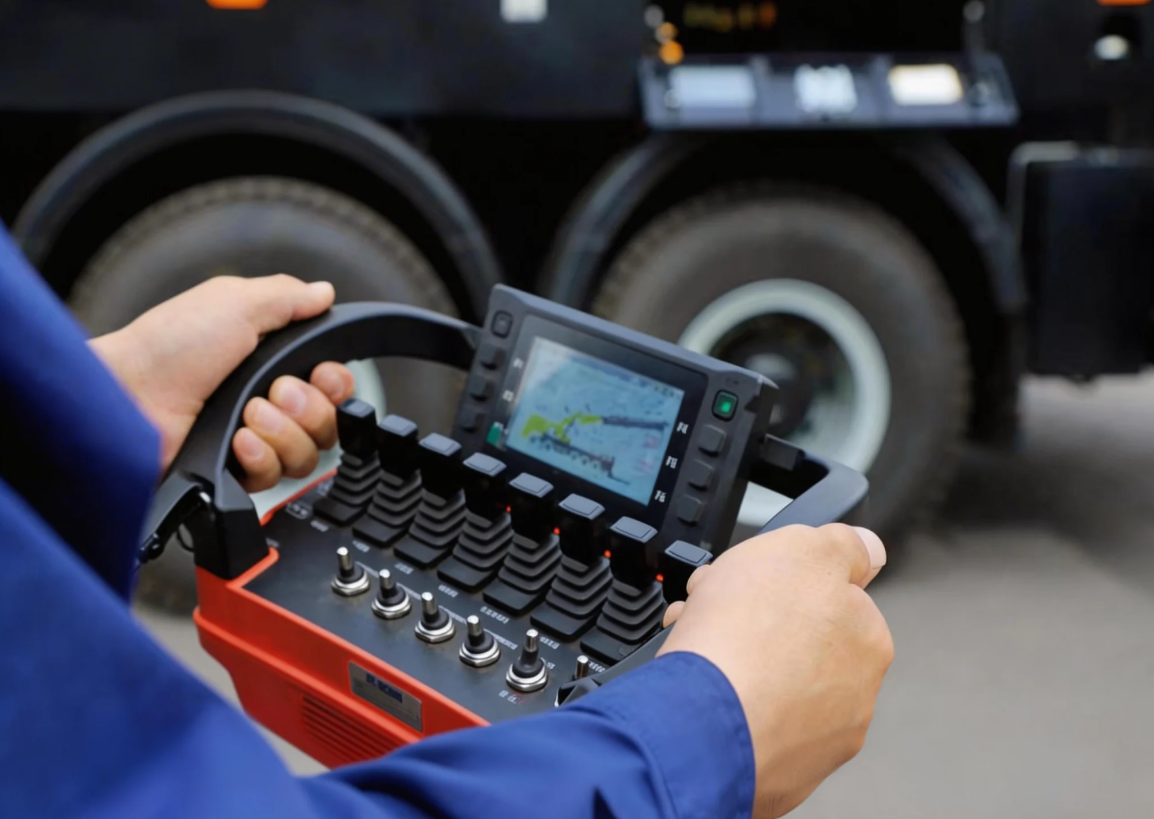
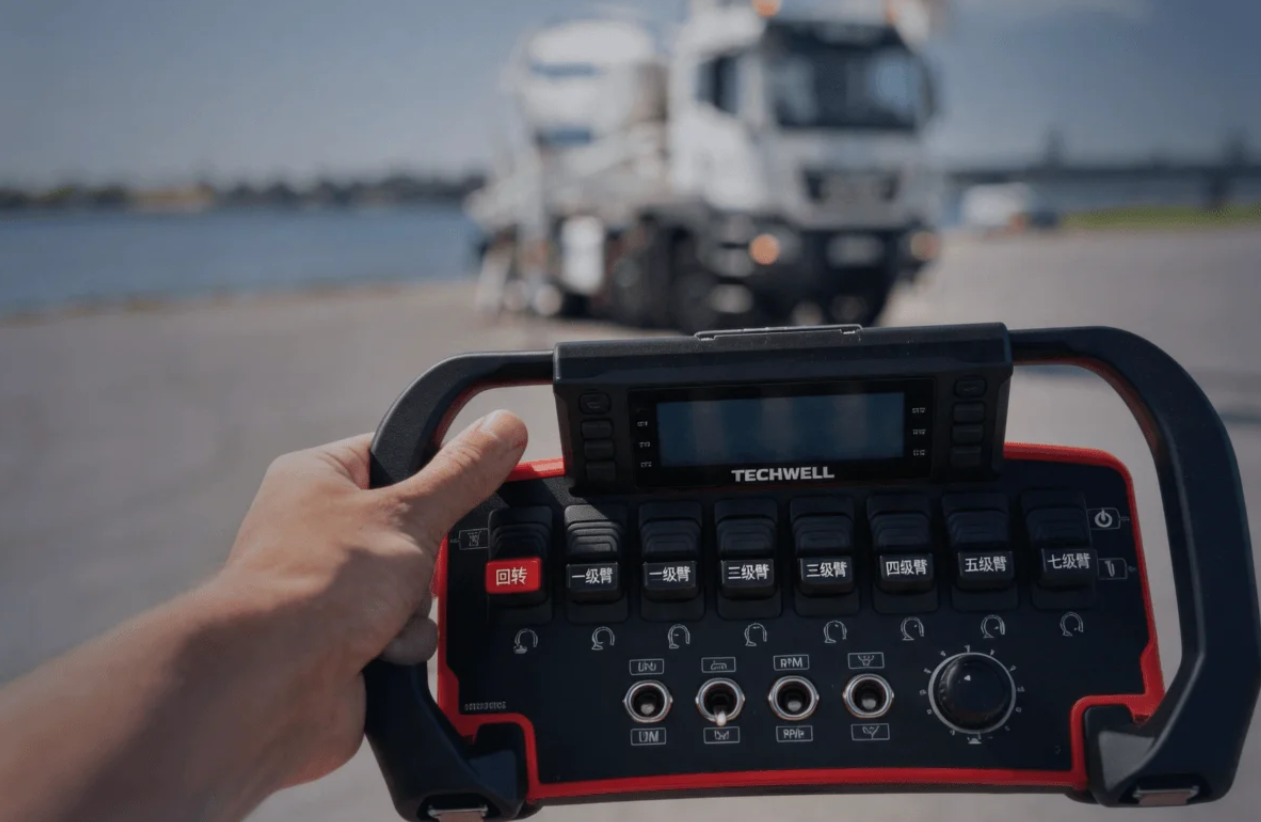
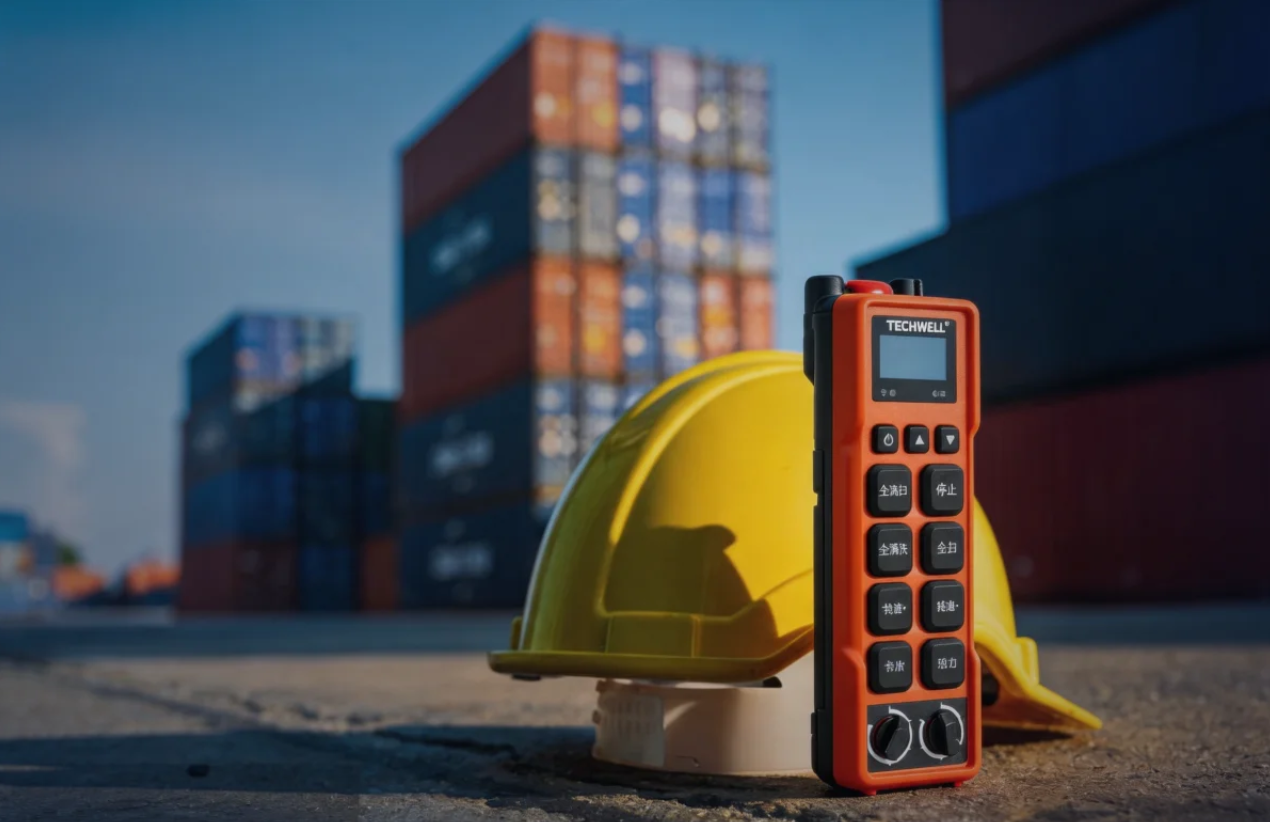
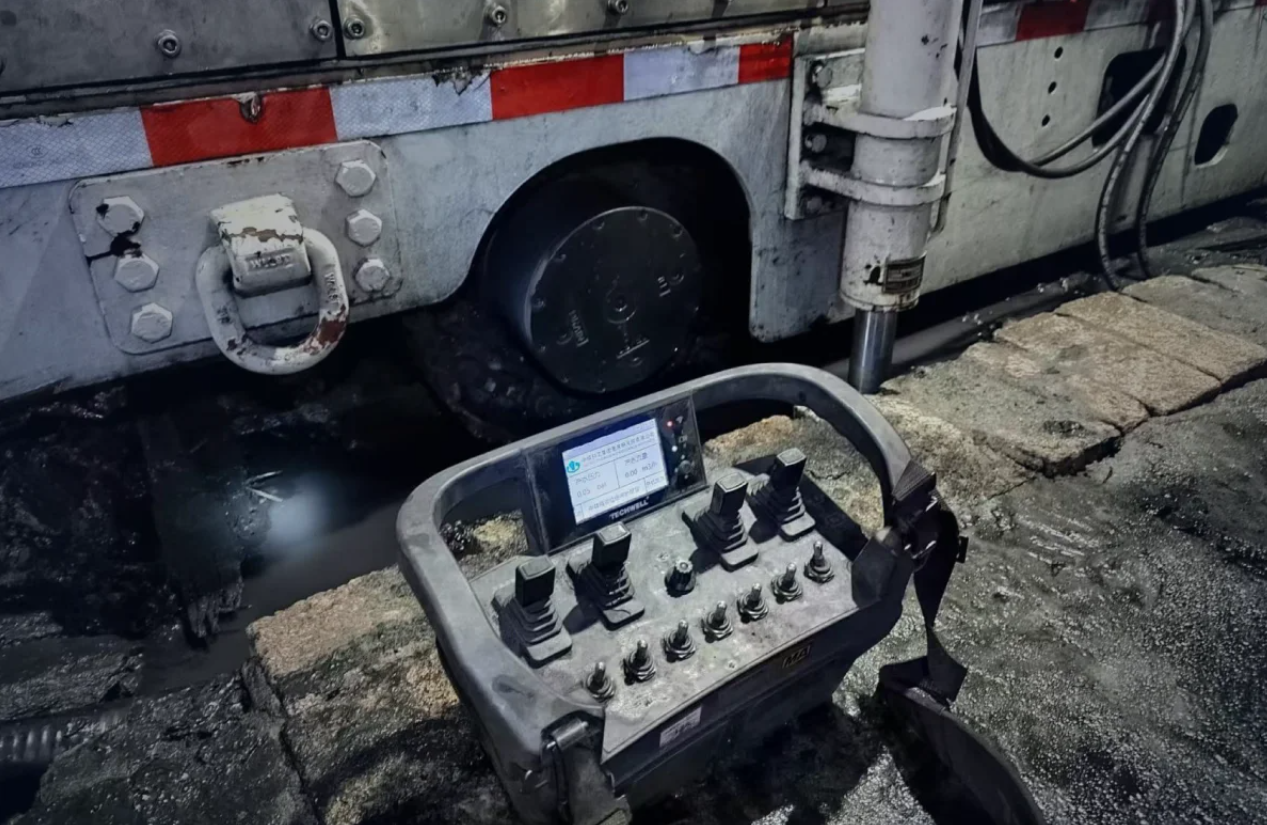
A belly box controller offers a body-worn alternative to handheld transmitters and fixed control panels. Its design must balance weight, access to controls, and freedom of movement. Although the controller is supported by a shoulder or waist strap, operators still use their hands to operate the buttons, joysticks, or switches. This arrangement can reduce the need to hold the controller’s full weight during operation, depending on its design and wearing method.
The design also needs to consider how operators move around equipment, reach joysticks or switches, and maintain control during longer working periods. Strap position, control layout, and overall weight distribution can affect daily use. For equipment manufacturers, these factors make belly box design a separate engineering consideration rather than simply another transmitter format.
The Role of Belly Box Controllers in Machine Operation
Belly box controllers are designed to provide operators with a more flexible way to control industrial equipment. Compared with traditional wired control methods, wireless designs allow operators to move more freely around the working area.
In industrial environments, control accuracy and signal stability are important factors. A suitable industrial radio remote control should match the machine type, operation distance, and working conditions.
Different applications may require different control functions. Joysticks, switches, buttons, and display options need to be arranged according to the machine workflow. A practical controller design focuses on easy operation and clear response.
For equipment manufacturers, reviewing these details before integration can help create a smoother connection between operators and machines. The controller should support daily operation without adding unnecessary complexity.
Key Functions to Review for Industrial Applications
Wireless control systems usually include several components that affect the user experience. Communication frequency, operating range, control configuration, and protection level all influence how the system performs in industrial environments.
When selecting a belly box controller, businesses should review whether the device can support specific machine functions. Proportional joysticks can provide more precise movement control, while programmable buttons allow operators to manage different actions based on equipment requirements.
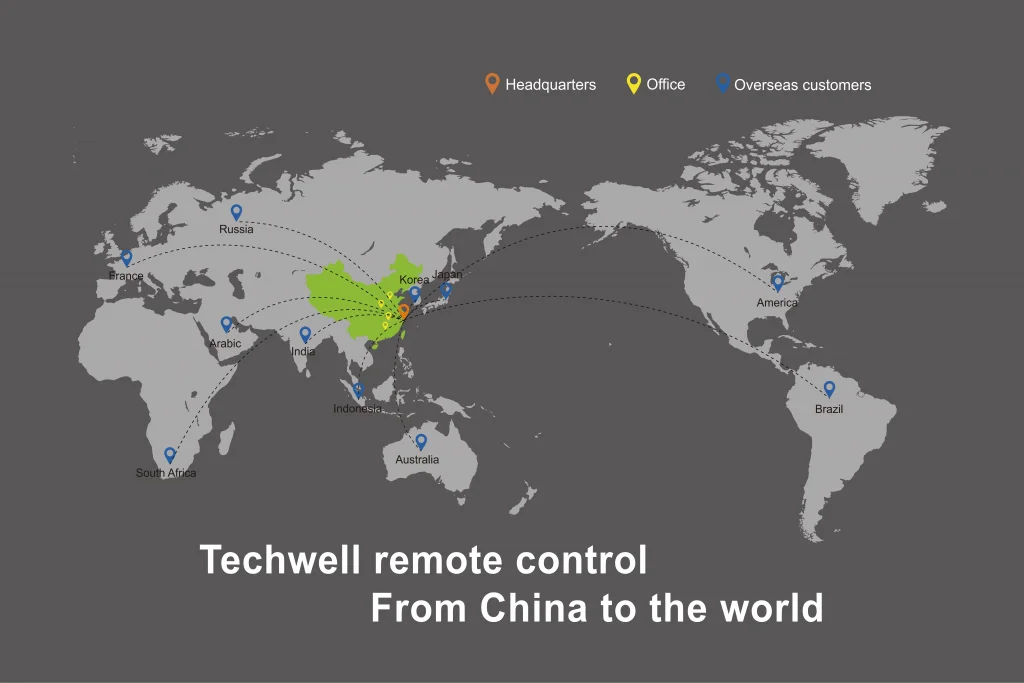
We focus on practical control needs when developing industrial remote solutions. The Techwell Remote Control product range includes configurable options for different machine applications, allowing partners to adjust joystick numbers, switch layouts, and additional functions.
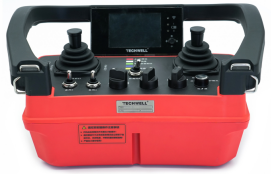
For example, the BLJ10 is a shoulder-mounted industrial remote control designed for crane and hoist applications. Its body-worn design allows operators to carry the controller while moving between suitable working positions, with the controls remaining accessible during operation.
Operator Experience and Control Design
Operator comfort should be evaluated using the BLJ10’s actual working configuration, including the battery and optional display if fitted. The total weight, weight distribution, center of gravity, and shoulder strap adjustment range should be confirmed before assessing wearing comfort. Practical tests should check control accessibility, stability while walking, and shoulder or neck fatigue during a defined operating period. Test records should specify the configuration, wearing duration, and operator feedback rather than assuming the controller remains comfortable throughout a full shift.
The BLJ10 includes a customizable dual-axis joystick, programmable buttons, and rotary switches. Its large panel and grips are designed for equipment that requires multiple control functions during operation.
The BLJ10 offers optional 3-inch, 4.3-inch, or 7-inch displays, with resolution to be confirmed for each configuration. Where video feedback is required, engineers should verify camera compatibility, the video transmission link, actual latency, and whether signal interruptions or dropped frames are indicated. Video feedback can provide supplementary operating information, but it should not replace direct observation of the work area or be treated as a certified safety function without supporting validation.
A well-planned control layout helps operators understand machine responses more easily. For industrial partners, choosing suitable configurations can improve daily workflow and support different equipment structures.
Safety Features and Environmental Adaptation
Industrial sites may involve dust, temperature changes, and long operating periods. Remote control equipment needs to match these conditions through suitable protection design and stable hardware performance.
The BLJ10 features an IP66-rated enclosure and is specified to operate from -25°C to 70°C. Any claimed SIL 2 capability must be verified for the specific safety function, matched receiver, certification documents, and approved hardware and software versions. Optional displays, joysticks, and sensors must also be checked against the certified configuration. Certification of a particular configuration does not establish the safety performance of other variants or the complete machine.
We consider environmental requirements during product development because different industries have different operation conditions. Factors such as protection level, communication stability, and control feedback should be reviewed together before selecting a remote system.
Additional options, including RFID card recognition and 3-axis sensors, can support customized application needs. These functions provide more choices for businesses designing control systems for specific machines.
What Should Be Checked Before Selecting the BLJ10?
Before selecting the BLJ10, buyers should evaluate its total weight with the battery and selected display, weight distribution, center of gravity, and shoulder strap adjustment. Practical wearing tests should assess controller stability while walking, access to joysticks and switches when wearing gloves, and shoulder or neck fatigue during representative operating periods. Test duration and operator feedback should be recorded rather than assuming the controller remains comfortable throughout a full shift.
For a project-specific assessment, contact Techwell Remote Control to request the BLJ10 product datasheet, strap specifications, approved configuration details, and available wearing test information. These documents can help buyers confirm whether the proposed controller arrangement suits their operating conditions.